
Last updated: November 18, 2026
Quick Answer: In most cases, how to fix vented soffit panels comes down to 3 choices: reseat a loose panel, resecure a failed edge, or replace a damaged section. For safe access, use a ladder that reaches the work area without overreaching, and if the panel is cracked, bowed, or keeps slipping, consult a professional. The first check is simple: find out whether the panel is loose because the fastener failed, the slot missed the channel, or the panel itself is damaged. If the panel is warped or broken, a replacement panel is the clean fix. How to fix vented soffit panels depends on matching the repair to the panel condition, not forcing one method on every problem.
Key takeaways
Start with the smallest correction: a loose edge, a slipped slot, or a bent channel. How to fix vented soffit panels usually starts with a 10 to 20 minute check on one section, not a full replacement.
Keep the vent openings aligned so the soffit still supports attic ventilation. The U.S. Department of Energy notes that attic ventilation helps manage heat and moisture, which is why a panel must still vent after the repair.
Use the same panel profile and finish if the old piece is too damaged to reuse. A close match matters because one mismatched panel can stand out from the ground.
Stop if the edge keeps sagging, the wood behind it is rotten, or the panel will not stay locked in place. OSHA ladder guidance also makes clear that safe access matters before any exterior repair.
A rushed repair can block airflow or leave the soffit looking patched from the street. For how to fix vented soffit panels well, the finish and the airflow both matter.
What is the first thing to check?
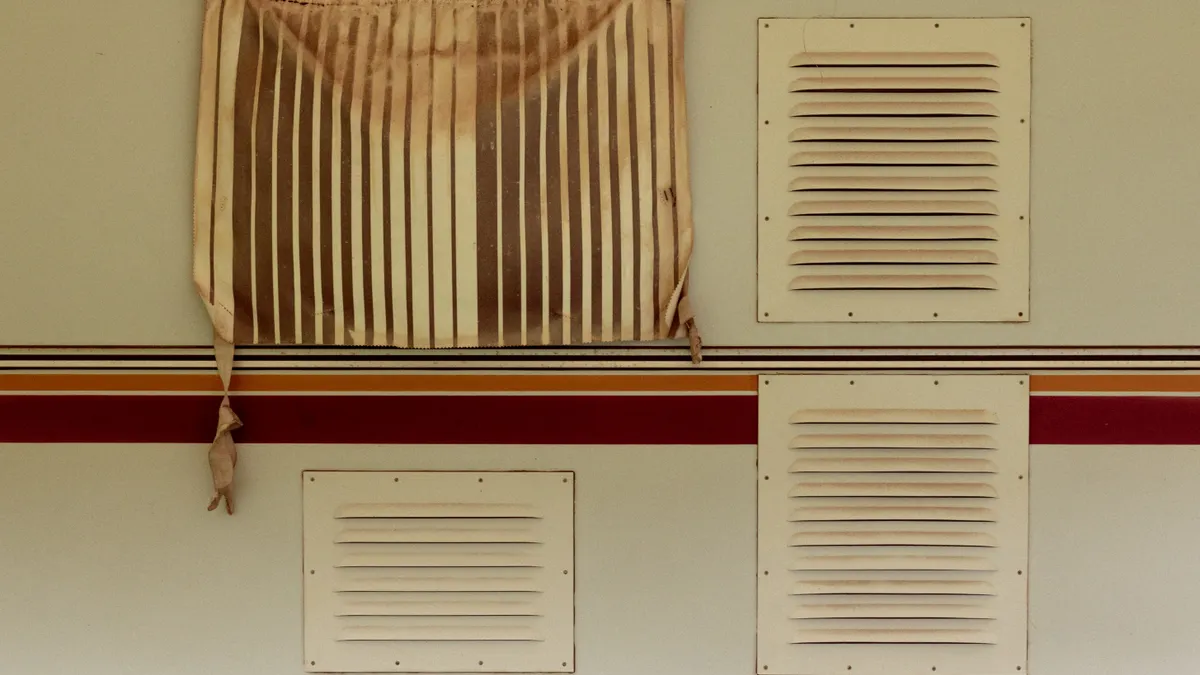
The first thing to check is whether the vented soffit panel is actually loose, or whether the frame around it has failed. A panel that dropped out of the j-channel usually needs a small reset, while a panel with a cracked edge, bent lip, or torn vent opening usually needs replacement.
Look at the soffit from the ground first, then from a ladder only if the area is stable and safe. Check for three common problems: a missing nail, a channel that has pulled away, or a panel that no longer sits flat because moisture has swollen the edge. If the panel is still intact, the fix may take only 10 to 20 minutes for one section.
The hard part with a vented soffit is not just fitting the piece back in. The panel must line up with the vent path so air can keep moving into the attic. If the repair closes off the vent slots, the soffit may look neat but fail at its job.
Two trustworthy references on safe access and attic airflow are the OSHA ladder guidance page and the U.S. Department of Energy’s attic ventilation page. Those sources are useful before you start how to fix vented soffit panels on a ladder or near an attic edge.
How do I remove a vented soffit panel without breaking it?
You remove a vented soffit panel by freeing one edge, sliding it out of the j-channel, and lowering it without twisting the vented face. The goal is to save the panel if the panel is still straight and the locking edge is not cracked.
- Support the panel with one hand or a flat pry bar. Start at the loose edge and keep the panel from flexing hard, because vented vinyl and similar soffit panels can crack at the lip.
- Back out or release the fastener that holds the panel edge. If nails are used, pull them straight rather than prying sideways, so the channel does not tear.
- Slide the panel toward the open end of the channel. This is the cleanest way to release a panel that is trapped in j-channel.
- Lower the panel flat. Do not fold it against itself; a bent vented soffit panel often will not sit flush again.
- Inspect the removed piece. If the vent slots are crushed, the nail line is split, or the panel is bowed, plan on using a replacement panel instead of forcing the old one back in.
If the panel will not move after the fastener is out, stop and look for paint bridging, hidden nails, or a channel that has pinched shut. Forcing it usually costs more than the panel itself because it can damage the surrounding trim.
Which fix should I use: reseat, resecure, or replace?
Choose the smallest fix that still leaves the soffit flat and vented. If you are unsure, consult a professional, because how to fix vented soffit panels safely depends on whether the issue is alignment, fastening, or damage. Reseating works when the panel simply slipped out of alignment, resecure works when the fastener failed, and replacement works when the piece is cracked, warped, or mismatched.
| Problem you see | Best fix | Why this choice works |
|---|---|---|
| Panel popped out of the j-channel | Reseat it | The piece is still usable and the profile still matches |
| One end is loose but panel is intact | Refasten the edge | The panel can stay in place if the attachment is restored |
| Panel is split, warped, or sun-faded in one spot | Replace it | A damaged panel will keep loosening or look patched |
| Vent openings no longer line up | Replace or reposition | Airflow matters as much as appearance |
| Surrounding wood is soft or dark | Stop and inspect further | The panel may be reacting to a deeper moisture problem |
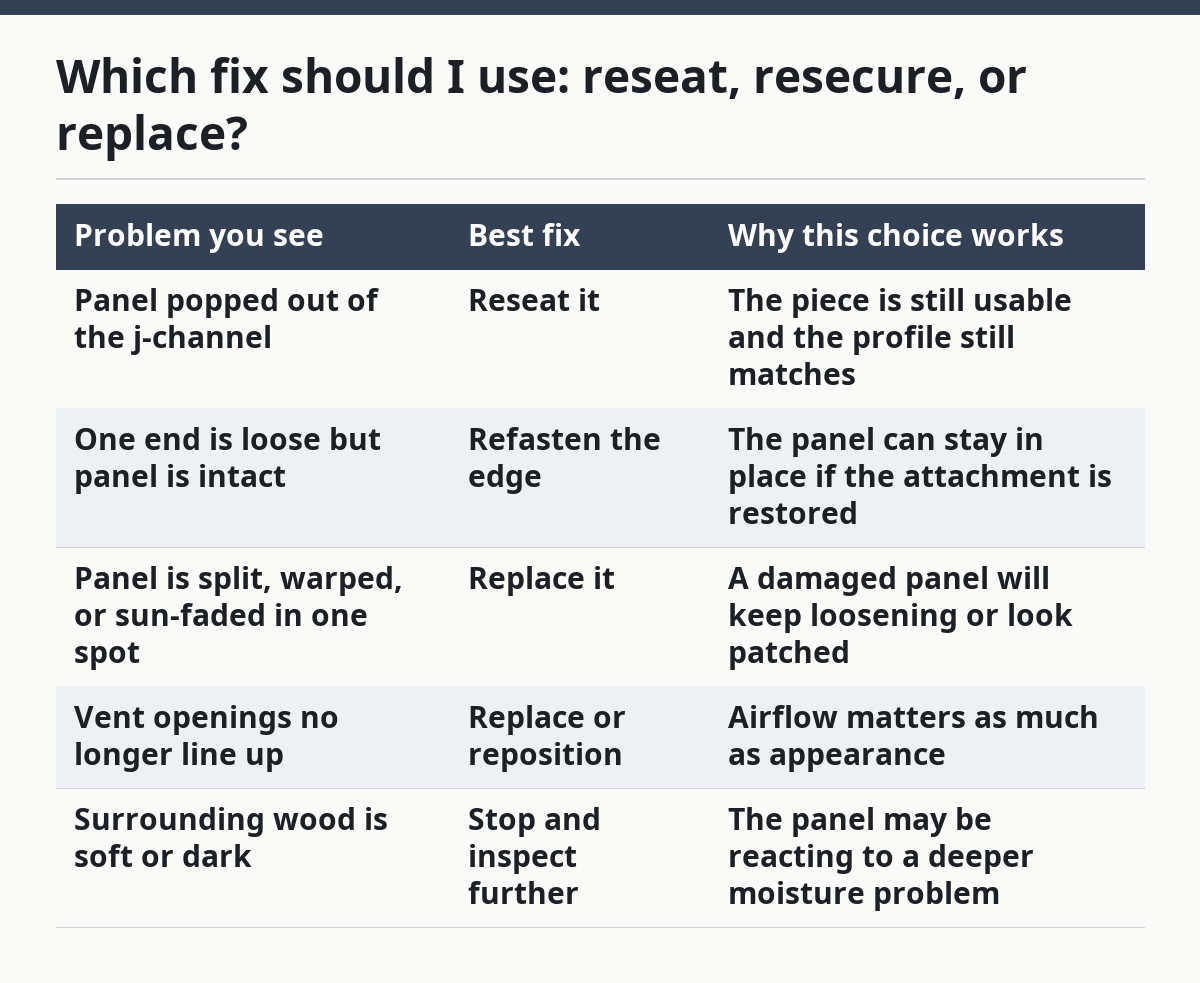
A replacement panel is the right choice when the old one no longer holds shape. If the soffit was painted, weathered, or trimmed to a specific profile, matching the finish is part of the repair, not an afterthought. A nearly correct panel still leaves a visible seam or a dead spot in the vent pattern.
This is also the point where a generic “just caulk it” answer goes wrong. Caulk can hide a gap, but it can also glue a vented panel shut and reduce attic ventilation.
How do I fit the replacement panel so the vents still work?
You fit the replacement panel by matching the panel profile, sliding it into the channel fully, and checking that the vent slots remain open after the fasteners go in. The fit has to be snug, not forced.
Start by comparing the new piece to the old one before it goes up. The width, edge profile, and vent pattern must match closely enough that the panel sits in the same plane as the others. If the piece is even slightly too wide, it may bow; if it is too narrow, it may rattle and pull free.
Keep the j-channel clean and open before installation. Dirt, old nails, bent metal, or swollen paint can stop the panel from seating all the way. A panel that only catches half way in the channel often looks installed from below but drops later when wind moves it.
When you fasten it, do not crush the panel tight against the trim. The panel needs a little movement for expansion and contraction. If it is pinned hard at both ends, the edge can buckle and the vent path can narrow.
What mistakes cause vented soffit panels to fail again?
Vented soffit panels fail again when the repair blocks movement, ignores moisture, or uses the wrong fit for the opening. The most common mistakes are small, but they add up fast.
The first mistake is using nails where the panel needs room to shift. A fixed panel can split at the edge after a season of heat and cold. The second mistake is pushing the panel in without checking the j-channel, which leaves one side half seated. The third mistake is covering vent openings with paint, sealant, or patch material.
Moisture is the other problem people miss. If the old panel failed because the edge stayed damp, the new one can fail the same way unless the source is handled. That may mean cleaning the channel, checking the roof edge above it, or looking for soft backing material behind the soffit.
Finish matching matters too. A new panel that is the wrong color, sheen, or profile stands out from the ground, even if the repair is technically sound. If you are replacing just one section, use a piece that blends with the rest well enough to look intentional rather than the cheapest close match.
When should I stop and get help?
You should stop and get help if the soffit edge is rotten, the opening is badly out of square, or the panel keeps pulling loose after one careful reset. A recurring failure usually means the problem is in the framing, not the panel.
This is also the line to stop at if the repair needs more than a single panel and a clean channel. A soffit section that has sagged over a wide area may need carpentry work before any replacement panel will stay put. If the attic ventilation path is damaged, the soffit repair should be part of a larger soffit and fascia repair method, not an isolated patch.
Use caution with ladders and roof edges. OSHA’s ladder safety guidance is a good reminder that a simple exterior repair becomes risky fast if the setup is unstable. If the work area is above a one-story height or the access is awkward, the safer move is to stop rather than force the repair from a bad position. That is often the right call when how to fix vented soffit panels turns into a framing problem.
How do I keep the finished repair from standing out?
You keep the finished repair from standing out by matching the panel profile, keeping the vent spacing consistent, and cleaning the trim line before the last fastener goes in. A tidy fit is what makes the repair disappear from curb view.
If the old soffit has faded, the new panel may still read as newer even when it fits correctly. That is normal. The goal is not perfect invisibility; it is a straight line, open vents, and a finish that does not call attention to the repair from the street.
Check the panel from a few feet away before you call it done. The edge should sit flat, the vent holes should look even with the neighboring sections, and the j-channel should not bow. If one side looks pinched, loosen it and reset it before the panel starts to work itself loose again.
FAQ
Can a vented soffit panel be reused?
Yes, if it is still straight, uncracked, and the vent openings are not crushed. A reused panel should slide back into the j-channel without fighting the frame. If it was bent during removal or has split edges, replacing it is the better choice.
Will replacing one panel affect airflow?
It can, if the new panel does not match the vented pattern or is not seated correctly. One replacement panel should keep airflow working when the vent openings line up with the rest of the soffit. A mismatched or blocked panel can reduce attic ventilation in that section.
What if the panel keeps coming loose?
The problem is usually in the channel, the fastener, or the panel itself. Check for a bent j-channel, a missing nail, or a warped edge that cannot stay seated. If the same section loosens again after one correct reset, the surrounding frame may need repair before the panel will hold.
Drafted with AI; not yet reviewed by a person.