
Last updated: November 12, 2026
Quick Answer: When deciding when to replace soffit and fascia instead of repairing them, use replacement when rot, repeated leaks, or structural failure have spread beyond a small patch; if the damage is still isolated, repair may be enough.
This guide explains when to replace soffit and fascia instead of repairing them, where repair stops making sense, what signs mean whole-section replacement, and how to judge the roof edge without guessing.
Key takeaways
- Small surface damage can stay in the repair zone, but soft wood, recurring water stains, and loose framing point to replacement.
- If the same spot fails again after a patch, the issue is usually bigger than the patch.
- A fascia board that no longer holds nails, gutters, or straight lines has lost too much strength to trust.
- Soffit panels with widespread sagging, cracking, or hidden moisture often need more than a quick fix.
- Whole-section replacement is the safer call when damage is spread across several feet, not one corner.
- The choice is less about appearance and more about whether the roof edge still does its job.
When does soffit and fascia replacement make more sense than repair?
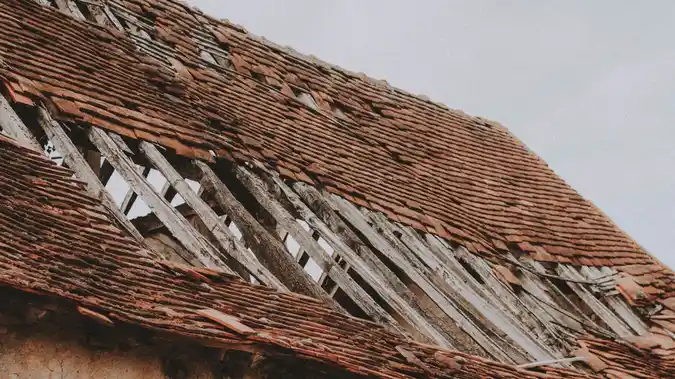
Soffit and fascia replacement makes more sense than repair when the damage has moved past a local fix and into the structure of the roof edge.
If the fascia board is soft, the soffit panels are sagging, or water damage keeps returning after patchwork, repair is usually the wrong tool.
Picture this: you’re on a ladder, scraping paint off a fascia board and the wood gives under the screwdriver. The crack you came to fix is no longer the real problem. The board has lost strength, and that usually means whole-section replacement instead of another patch.
If the issue has crossed from one board to the next, consult a qualified roofing or carpentry professional before treating it as a replacement job.
- Soft or punky wood means rot has already eaten into the board.
- Repeated leaks mean water is still getting in, so the repair did not solve the source.
- Widespread sagging in soffit panels often points to hidden damage behind them.
- Loose gutters or nails that won’t hold show the fascia is failing as a fastener base.
A repair works best when the damage is small, dry, and isolated to one spot. A replacement works better when the problem keeps showing up in the same edge detail or has spread across several sections. The difference matters because fascia and soffit are not decorative trim; they help close the roof edge and protect the eaves from weather.
One useful rule is simple: if you can trace the problem to one small area and the surrounding wood is solid, repair may still be enough. If the bad area keeps expanding, the job has outgrown repair.
What damage means the board is past saving?
Damage is past saving when the material has lost strength, not just finish.
The biggest warning signs are extensive rot, repeated moisture staining, and hardware that no longer bites into the wood.
Picture this: you remove a section of fascia and find a dark line running along the back edge for several feet. The front still looks fine from the ground, but the hidden side is breaking down. That kind of damage usually spreads under paint long before it shows outside.
The signs are plain:
- Wood that crumbles when probed
- Fasteners that spin instead of grip
- Long cracks that open along the grain
- Sections that bow, twist, or pull away from the roof edge
- Staining that keeps coming back after drying
An isolated split can sometimes be repaired. A board with deep rot across multiple feet cannot reliably hold itself, much less gutters or trim. Same with soffit panels that sag because the backing is compromised. Once the material has weakened through its thickness, cosmetic repair only hides the problem.
A lot of generic advice gets this wrong by focusing on paint, caulk, or visible gaps. Those are symptoms. The real question is whether the board still has enough solid material to stay fastened and keep the edge straight. If the answer is no, replacement beats a repair that will fail again in a season or two.
How do I tell repair from replacement at the roof edge?
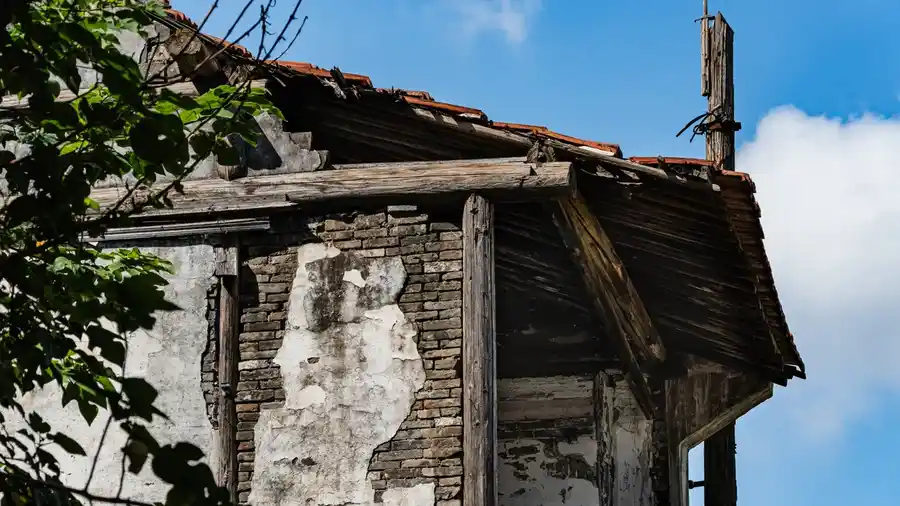
Repair is for localized damage; replacement is for widespread failure along the roof edge.
If you can isolate the problem to a short section and the rest of the fascia board and soffit panels are solid, repair is still in play.
Picture this: you walk the eaves after a storm and see one 2-foot section with peeling paint, one small soft spot, and a loose corner. That’s a very different job from a 20-foot run where the boards are swollen, stained, and pulling away from the house. The first case may stay local. The second usually doesn’t.
Use this check:
- Press the wood with a screwdriver or awl. If it resists, the board may still be sound enough for repair.
- Check 3 to 6 feet on each side. If neighboring sections are also soft, the damage has spread.
- Look for stains on the soffit underside. Repeated marks often mean an active leak, not an old one.
- Test the fasteners. If nails or screws pull out easily, the fascia is no longer a good attachment point.
- Inspect for movement. If the edge flexes when pushed, the backing or the board may be failing.
- Check the pattern. One bad spot suggests repair. Several bad spots suggest replacement.
This is where many homeowners get trapped: they replace a piece, paint it, and then discover the next section is failing a month later. That wastes money and leaves the roof edge looking chopped up. The smarter line is whether the damage is contained or repeated.
If the problem has crossed from one board to the next, treat it as a replacement job only after a qualified pro confirms the scope. If not, a repair may still buy time. For guidance on maintenance and inspection basics, see the National Roofing Contractors Association and This Old House.
Why repeated leaks change the decision
Repeated leaks usually mean the soffit or fascia is part of a larger failure, not a one-off defect.
If the same stain, drip, or swelling returns after a repair, the damage is telling you the weak point was never fully removed.
Picture this: you fix a small opening, wait through one rain, and the stain comes back in the same place. That is not random. Water is following the same path through failed wood, bad joints, or a compromised roof edge.
That pattern matters because moisture does not stop at the surface. It seeps behind paint, into joints, and into the wood below the visible line. Once that happens, the repair area can look acceptable while the hidden damage keeps growing.
Repeated leaks often come with these clues:
- Fresh bubbling paint after drying
- Soft spots that return after a “dry out” period
- Mismatch between the repaired patch and the neighboring section
- Moldy or damp insulation near the eaves
- Gutters that overflow the same area again and again
The truth is, a second leak is usually more expensive than it looks. Every repeat means more labor, more opening and closing of the same area, and more risk that the surrounding materials are also compromised. That’s why repeated water damage often pushes the decision from repair to whole-section replacement.
This is also the point where a quick cosmetic fix becomes a bad bet. Caulk and paint can cover a dry board. They cannot rescue wood that keeps getting wet. For moisture and decay guidance, the U.S. Environmental Protection Agency and the U.S. Department of Energy both note that ongoing moisture leads to material deterioration over time.
What does whole-section replacement actually solve?
Whole-section replacement solves the hidden damage that a patch cannot reach.
It gives you a new fascia board or soffit section with solid material, straight lines, and a clean fastening surface.
Picture this: you remove one bad board and find the damage extends under the next joint, into the blocking, or along a long run of the eave. A small repair would only touch the most visible part. Replacement lets the whole bad stretch come out at once.
That matters for three reasons:
- It removes hidden rot that would keep spreading behind a patch.
- It restores fastening strength so gutters, trim, and panels can attach properly.
- It gives a consistent edge instead of a patchwork of old and new pieces.
Replacement is also the cleaner choice when the damage affects appearance across a visible run. A small insert can stand out, especially if the existing material is weathered or warped. A whole-section job avoids leaving one weak seam next to four old ones.
Here’s the practical trade-off: replacement is more invasive than repair, and it exposes more of the roof edge during the work. But if the structure is already failing, that extra work is the point. You are not paying to preserve bad wood. You are paying to remove it before it spreads.
For a broader look at the repair side of the topic, the hub article on soffit fascia repair methods fits under this decision point and covers the smaller fixes that still make sense.
What a replacement decision should check before work starts
A replacement decision should check the full edge, not just the obvious bad spot.
The goal is to confirm that the failure is wide enough to justify opening the section once, instead of chasing it piece by piece.
Picture this: you stand back and see a straight fascia line from the driveway, but up close one end is swollen, the middle is soft, and the soffit is sagging near the vented panel. That is the kind of mixed damage that often hides its real size.
Before choosing replacement, look at the following:
- Length of damage: if the bad area runs beyond one small bay, repair gets weaker as an option.
- Condition of adjacent wood: solid neighbors can often stay; damaged neighbors usually should go too.
- Fastener grip: if the board cannot hold nails, it cannot perform as fascia.
- Moisture history: repeated wetting can mean more hidden decay.
- Framing below: damaged backing or blocking can make a simple surface repair pointless.
Because of that, a careful check often prevents overwork and unnecessary removal. Not every bad-looking section needs a full run replaced. But the reverse is more common: a board that looks repairable from the ground is already too soft once opened.
Use this rule of thumb: if the damage is only on the face and the wood behind it is sound, repair may be enough. If the damage reaches the backing, repeats after fixes, or spreads along the edge, replacement is the safer line. For a second opinion on moisture and decay conditions, OSB and wood deterioration guidance from the U.S. Department of Energy is a useful starting point.
FAQ
How much damage is too much?
Damage is too much when the wood has lost strength, not just paint. If the fascia board is soft, the soffit panels sag, or the same spot keeps failing after a repair, the job has likely crossed into replacement. A few cracked inches are different from rotten feet.
Should matching materials be used?
Matching materials should be used when the goal is a consistent look and the existing roof edge is still mostly sound. If the damaged section is only part of a larger failure, matching alone will not fix the problem. Structure comes first; appearance comes second.
Can replacement be done in sections?
Replacement can be done in sections when the damage is isolated and the surrounding boards are solid. If rot or repeated leaks are spread across several bays, section-by-section work can become a chain of short-lived fixes. That usually turns into more labor and more seams than a larger replacement.
Drafted with AI; not yet reviewed by a person.


-
-
-
-
-
-
Show Comments[…] need a soffit and fascia contractor who can explain the work clearly before the first board comes off. Ask about license, […]
[…] the catch: a soffit and fascia repair site can be the right entry point, but it is still best to consult a professional if the […]
[…] it ties its claims to specific references, and least useful when it leaves the source implied. For soffit and fascia topics, that is a meaningful difference because the line between “handy tip” and “install it […]
[…] wears soffit and fascia down through water, heat, movement, and impact at the roof […]
[…] Soffit and fascia do different jobs, and the material choice has to match each one. […]
[…] When to Replace Soffit and Fascia Instead of Repairing Them […]