

Last updated: November 16, 2026
Quick answer: yes — if the damage is small, local, and under about 2 inches wide, you can often repair soffit without replacing the whole run. That usually means a few holes, a short soft spot from minor rot, or one damaged section around a vent opening. If the panel is sagging, crumbling, or blocking airflow, patching stops being the right fix.
Key takeaways
- Small holes and edge damage are often patchable with wood filler or patch material.
- Localized rot can sometimes be cut back and patched if the surrounding panel stays firm.
- If vent openings are blocked or the panel is soft over a wide area, patching is the wrong move.
- A good repair should match the finish and keep the soffit vents working.
- Patch work can save a section, but it is not a cure for large decay or repeated moisture damage; if the damage keeps returning, consult a professional.
What kind of soffit damage can be patched?
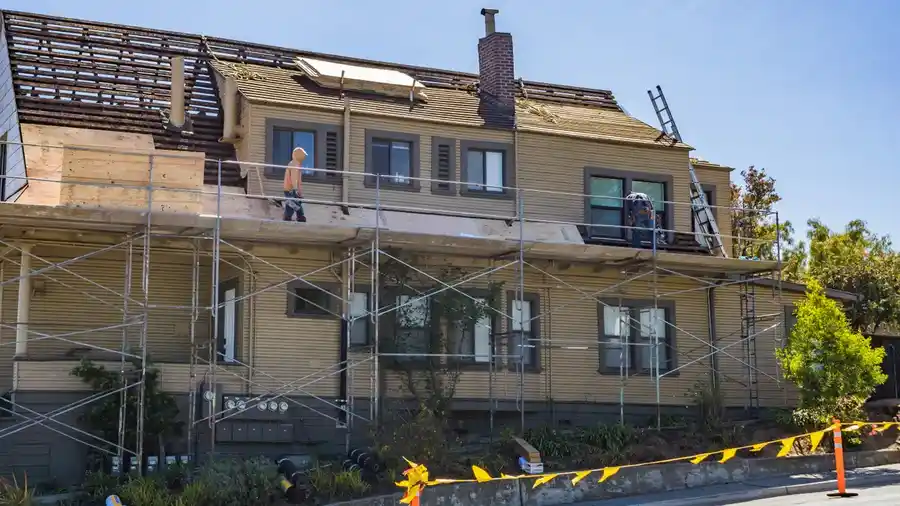
Small, stable damage can often be repaired without replacing the full soffit panel. Common candidates include pinholes, nail pops, a split corner, or a limited patch of rot that stays under about 2 inches wide and does not spread past the edge of the opening. If the damage is only in one spot, a patch can be the cleanest fix.
The panel matters too. Soffit panels that are still flat, firmly fastened, and not warped are much more likely to accept a patch. If the wood is soft all around the damaged area, or the panel flexes when pressed, the repair will only hide a bigger problem for a short time. For that kind of diagnosis, a soffit inspection or soffit fascia repair check can help.
The most important limit is ventilation. If the soffit has vent openings, a repair cannot block them. A patch that closes off airflow can create the same moisture problem that damaged the panel in the first place. The U.S. Department of Energy notes that attic ventilation helps manage heat and moisture, which is why blocked vents are such a concern. U.S. Department of Energy attic ventilation guidance
How do you repair a small soffit hole?
You repair a small soffit hole by cleaning the opening, filling it with the right patch material, and sealing the surface so water cannot get back in. For a hole or chip smaller than a few inches, this is usually the simplest route.
- Clear loose material from the hole. Scrape away soft paint, splinters, and dust with a putty knife so the patch bonds to solid edges.
- Trim the damaged edge to firm material. Square the opening if needed, because a clean edge holds patch material better than ragged wood.
- Pack in wood filler or patch material. Press it in firmly so there are no air pockets, then shape it flush with the soffit face.
- Let the patch cure fully, and follow the product label if the dry time is unclear. If the patch is still soft after the labeled cure period, stop and consult a professional before sanding or repainting.
- Sand smooth and match the finish. Feather the repair into the panel and repaint or refinish the spot so the patch does not stand out.
- Keep vent openings clear. If the hole is near a vent, stop the patch short of the airflow path.
For a tight, neat repair, use the smallest patch that solves the damage. A 4-inch blob where a 1-inch chip was removed only makes finishing harder and more visible. If you are repairing trim nearby, a wood rot repair method may be a better match for the material.
Can localized rot be patched?
Localized rot can be patched if the decay is shallow and the surrounding panel is still sound. The repair works best when the soft area is small, the decay has not spread into framing, and the rest of the soffit panel still feels firm.
The first step is to remove every bit of soft wood. Leaving even a thin rotten layer under the patch gives moisture a place to stay. Once the weak material is gone, the opening can be rebuilt with patch material or a shaped insert, then sealed and painted. If the rot is tied to repeated leaks, a roof leak repair or gutter fix may need to happen first.
Here is the trade-off: a rot patch hides the surface damage, but it does not fix the moisture source. If the rot came from a roof leak, clogged gutters, or trapped attic moisture, the patch may fail again. That is why a rot repair is reasonable for a small area and wrong for a section that keeps darkening, swelling, or cracking after rain. The EPA warns that moisture problems can lead to mold growth within 24 to 48 hours, so repeated wetting is not something to ignore. EPA mold and moisture basics
What is the difference between a patch and a replacement?
A patch fixes one damaged area; a replacement swaps out the whole soffit panel or section. That difference matters because a patch is faster and less disruptive, but it only works when the rest of the panel is still worth keeping.
| Option | Best for | Limits | What you get |
|---|---|---|---|
| Wood filler repair | Tiny holes, nail pops, hairline chips | Not for soft or moving wood | Fast surface fix |
| Patch material insert | Small cut-out areas, neat edge damage | Needs firm edges and careful finishing | Cleaner repair than filler alone |
| Fastener reset and sealing | Loose panel edges, minor gaps | Won’t fix rot | Better hold and weather seal |
| Full panel replacement | Sagging, widespread rot, repeated failure | More work and more visible disruption | Fresh panel and better long-term result |
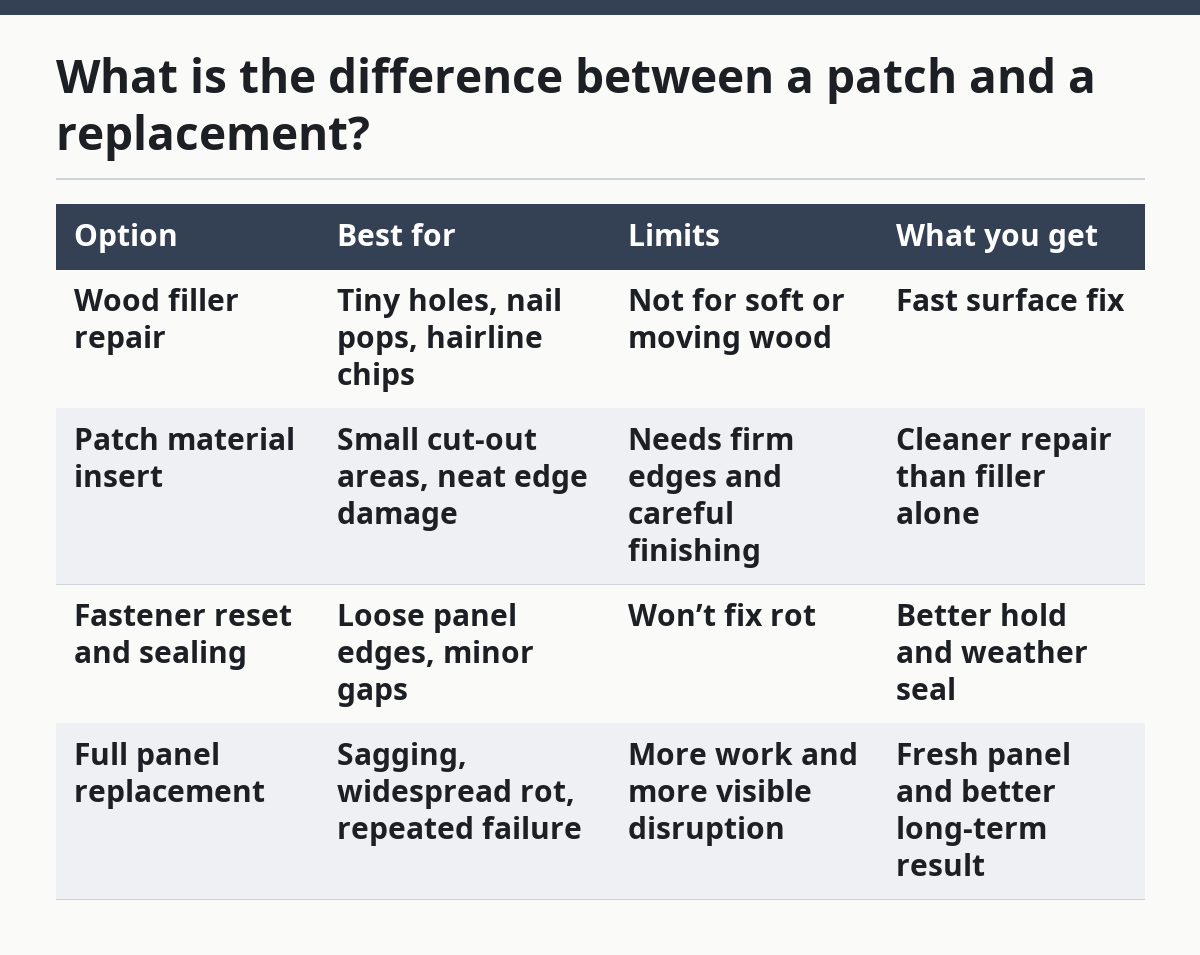
If the soffit is still straight and the damage is local, patching makes sense. If the damage covers a long run or the panel is failing at several points, replacement is the honest fix. A repair that keeps returning is not a savings. For nearby trim work, see siding repair and exterior painting.
How do you match the finish after a patch?
You match the finish by smoothing the repair, matching the sheen, and painting only the area that needs it when possible. A patch that is technically sound but visually loud can still be a poor result.
Start by sanding the patch so it sits flush with the surrounding soffit panel. Even a small ridge will catch light and make the repair obvious. Then use paint or finish that blends with the existing surface, keeping in mind that older soffit often has faded color and weathering that a fresh coat will not fully copy.
The main mistake is painting only the patch when the surrounding finish has aged unevenly. That can leave a bright square in the middle of a dull panel. On the other hand, repainting a larger section costs more effort and can make the repair look more natural. The right choice depends on how visible the soffit is from the ground. If the surrounding paint is already uneven, the cleaner fix may be a broader repaint rather than a tiny touch-up.
If the soffit includes vent openings, do not paint them shut. One thick coat can reduce airflow faster than many people expect.
When should you stop patching and replace it?
You should stop patching when the damage is wide, the panel is soft, or the soffit is no longer doing its job. A patch is wrong for a section with deep rot, repeated water staining, sagging, or vent openings that are too damaged to keep clear.
This is also the point where a repair becomes more expensive in time than in material. If you are cutting, filling, sanding, and repainting again and again, the panel is telling you the fix is temporary. That is especially true when the fasteners no longer hold or the panel keeps opening at the same seam.
There is one more limit: a patch cannot solve a ventilation problem by itself. If the soffit vents are blocked, crushed, or covered by old repair material, the attic side of the system still needs attention. For the broader repair sequence, the hub on soffit fascia repair methods is the better next step.
A patch is also the wrong answer for anyone looking for a perfect cosmetic match on weathered panels. Even a good repair can leave a faint outline in sunlight. That is normal, not failure.
What goes wrong with soffit patches?
Soffit patches fail when the bad wood is left in place, the repair blocks airflow, or the finish is skipped. Those three mistakes cost the most because they hide the damage without solving it.
A shallow filler job over soft rot is the classic error. It feels finished on day one, then cracks or sinks as the weak wood continues to move. Another common mistake is patching around vent openings without checking the path of air. The repair may look tidy, but it can starve the attic of ventilation.
The last problem is overbuilding the repair. A thick, oversized patch may be stronger than needed, but it is also more visible and harder to blend. The better move is a repair that is just large enough to reach sound material and keep the panel working.
For a small soffit problem, restraint usually wins. The fewer parts you disturb, the less chance you have of turning a 2-inch repair into a 2-foot job.
What damage is too far gone for a patch?
Damage is too far gone for a patch when the soffit panel is soft across a large area, sagging, or breaking apart at more than one point. If the wood gives under light pressure or the rot extends beyond a small local spot, patching will only hide the problem.
A repair also stops making sense when the fasteners no longer hold or the vent openings are too damaged to stay open. In that case, the panel is no longer a good candidate for spot repair.
Will a patch affect ventilation?
A patch can affect ventilation if it covers a vent opening or reduces the open area around it. Soffit vents need clear airflow paths, and a patch that seals them shut works against that.
A careful repair leaves the vent path open and uses materials only where the panel is solid. If the opening itself is damaged, the repair has to preserve the vent shape rather than block it.
How long can a repair last?
A repair can last a long time if the damage was small, the wood was dry, and the moisture source was fixed first. A patch over stable wood with proper sealing is far more likely to hold than one over active rot.
If the same spot keeps getting wet, the repair life shortens fast. In that case, the patch is only a pause, not a final fix.
Which repair is right for your soffit?
The right repair is the smallest one that restores sound wood, keeps the soffit attached, and preserves vent openings. If the damage is a small hole or a short patch of rot, a spot repair is usually enough. If the panel is soft, sagging, or repeatedly failing, replacement is the cleaner answer.
That judgment is the whole job here. A good soffit repair is not about saving every panel; it is about knowing when a patch is honest and when it is only a cover.
Drafted with AI; not yet reviewed by a person.

[…] Can You Repair Soffit Without Replacing It? […]