
Wrapping sound fascia in aluminum coil stock protects it and cuts down on repainting, but wrapping over rotten wood doesn’t fix anything — it hides the rot while moisture keeps working underneath, out of sight. Press a screwdriver into the board first: firm resistance means it’s sound enough to wrap; a soft, sinking, or crumbling spot means replace that section before any wrap goes on.
Key takeaways
- Aluminum wrap is a protective cover over existing fascia, not a repair. It doesn’t fix rot, and it can hide active rot from view for months or years.
- Test the wood before wrapping it: press a screwdriver tip into the fascia near the gutter line and at a few other spots. Firm resistance means it’s sound; sinking in easily, softness, or crumbling means rot.
- If the probe finds rot, cut out and replace that section of fascia before any wrap goes back over it — wrapping it as-is just buries the problem.
- Aluminum trim expands and contracts with temperature, so fasteners need to hold it securely without being driven in so tight it can’t move.
- Because the wrap hides the wood, a new leak or new rot usually won’t show until the aluminum itself bubbles, splits, or comes loose — worth a periodic re-check, not a one-time install and forget.
What does wrapping fascia in aluminum actually do?
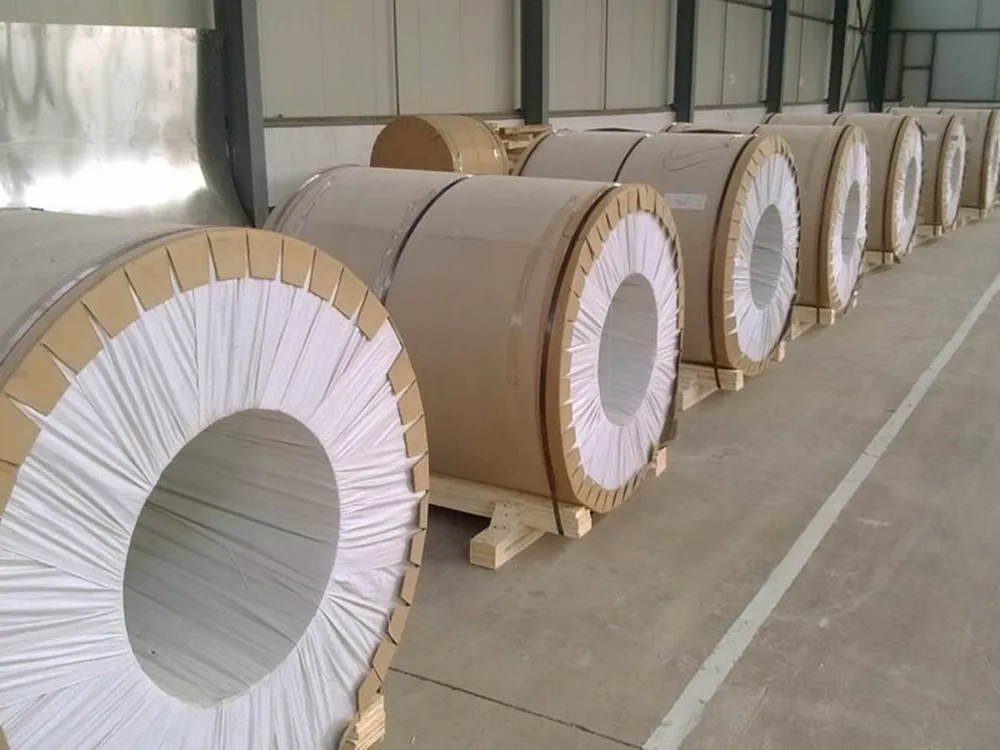
Aluminum fascia wrap is a thin strip of aluminum coil stock bent to the shape of the existing fascia board and fastened over it. It’s a finish and protection layer, similar in spirit to how vinyl or aluminum soffit material compares to painted wood — our vinyl vs. wood vs. aluminum soffit comparison covers that same maintenance trade-off for the horizontal soffit panels, and the same logic applies here to the vertical fascia board. Wrapped fascia doesn’t need repainting, sheds water better than bare or peeling-painted wood, and gives a clean, finished look at the roofline.
What it is not is a structural repair. The wood underneath is still wood. Wrapping changes what you can see from the ground; it doesn’t change what’s happening inside the board.
Does wrapping fix rotted fascia?
No. A detailed repair guide covering loose and detached aluminum fascia wrap makes this point directly: before reinstalling or installing a wrap, examine the fascia board, because if the wood underneath has significant rot, fasteners won’t have a solid surface to grip, and the affected section needs to be replaced before the wrap goes back on. Wrapping over wood that’s already failing just puts a dry-looking metal skin over a wet problem. The rot keeps spreading underneath, hidden from view, and because you can no longer see the wood to check on it, the first visible sign of trouble is often the aluminum itself starting to bubble, pull loose, or split — by which point the hidden damage underneath is usually well advanced.
If you’re trying to figure out whether gutters pulling away from the house point to this kind of hidden rot, our gutter pulling away from the house guide walks through the same screwdriver probe test in that context, since loose gutter hangers and fascia rot usually go together.
Is your fascia wood sound enough to wrap?
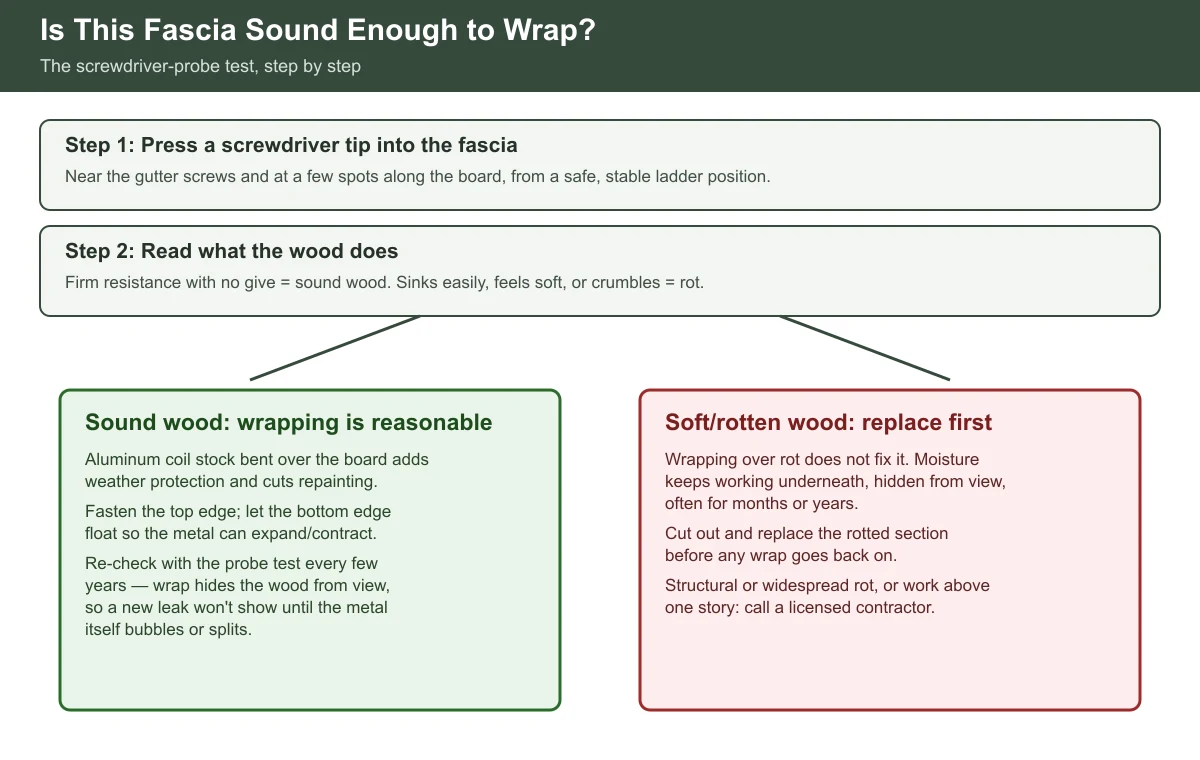
This is the one test that actually answers the question in the title. It takes a few minutes and needs nothing more than a flathead screwdriver.
| Step | What you do | What it tells you |
|---|---|---|
| 1. Probe | Press a screwdriver tip firmly into the fascia near the gutter screws and at several other points along the board, from a stable ladder position | — |
| 2a. Firm result | The tip meets solid resistance and doesn’t sink in | Sound wood. Wrapping is a reasonable protective upgrade. |
| 2b. Soft result | The tip sinks in easily, the wood feels spongy, or it crumbles | Rot. Replace that section before wrapping anything over it. |
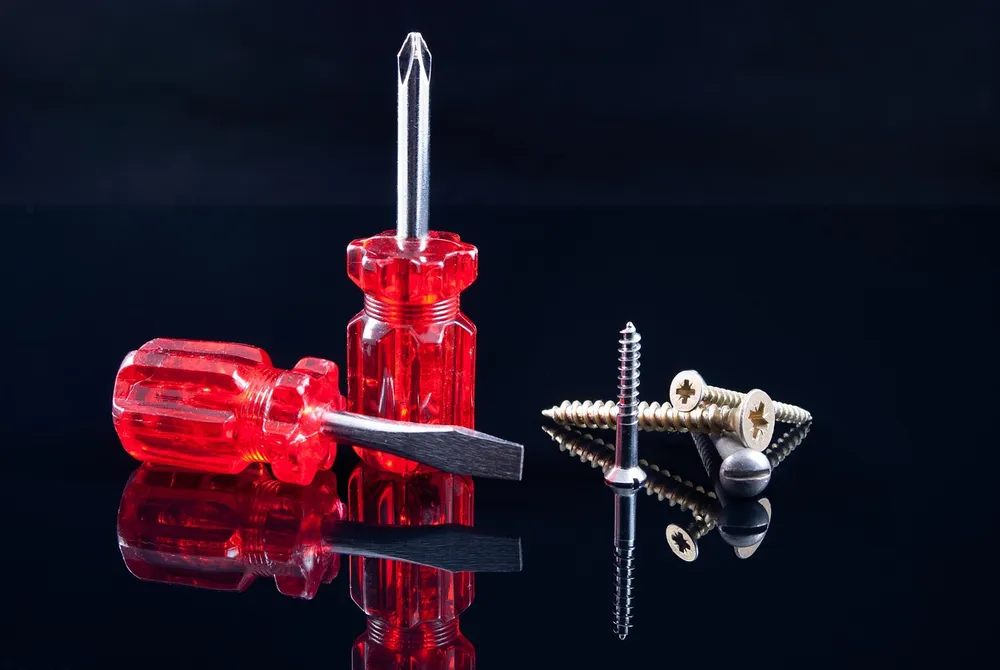
Check more than one spot. Rot is often worst right where water collects or runs — near gutter hangers, seams, and the lowest point of any sag — and a board can test sound at one end and soft a few feet away. If any section fails the probe test, that section gets replaced, not wrapped.
How should aluminum wrap be installed so it lasts?
Once the wood underneath has passed the probe test, installation quality is what determines how long the wrap holds up. A widely used fascia-wrap repair guide recommends fastening at a spacing of roughly every 16 to 24 inches, and specifically cautions against overdriving the fasteners: the aluminum should be held securely in place but still have enough room to expand and contract as temperatures change. Trade publication Journal of Light Construction makes the same underlying point from an installer’s perspective: aluminum coil stock expands and contracts with temperature noticeably more than the wood underneath it, so nail holes in the metal are typically punched oversized and fastened with aluminum or stainless-steel nails rather than driven tight, specifically so the metal can shift slightly without buckling. The same source notes that long runs of trim go on more predictably when the outside temperature is in a moderate range, roughly 60 to 65°F, since installing in very hot or very cold weather changes how much the metal has already expanded or contracted by the time it’s fastened.
Aluminum trim that’s nailed down bone-tight at every point has nowhere to move, which is how wrap ends up bowing, buckling, or working fasteners loose over time. Beyond that shared principle, exact lifespan and expansion-rate numbers for aluminum trim vary across manufacturer and contractor marketing material, with no single standards-body figure behind them, so treat any precise number you see quoted elsewhere as a rough, unverified range rather than a guarantee.
When is wrapping the wrong fix?
Skip the wrap, at least for now, if any of these apply:
- The probe test finds soft, sinking, or crumbling wood anywhere along the run — replace that section first.
- The rot looks widespread rather than a short, isolated section, or you can see daylight through the board.
- Fasteners for the gutter or wrap itself won’t hold — a sign the wood no longer has enough solid material to grip.
- The work is above a single story, or involves structural framing rather than just the fascia board itself.
In any of those cases, the fascia needs to be repaired or replaced before a wrap makes sense, and widespread or structural rot is a job for a licensed contractor rather than a DIY afternoon.
Ladder safety for fascia work
Set the ladder’s base out 1 foot for every 4 feet of height (roughly a 75° angle), and let the top extend at least 3 feet above the roofline or landing point for a handhold. Keep three points of contact at all times, stay off the top three rungs, use a spotter if you can, and set up on solid, level ground in non-slip shoes. Never use a metal ladder near power lines. If the fascia is above a single story, or the job involves structural repair rather than just the probe test and wrap, call a licensed contractor instead.
Frequently asked questions
Can I wrap fascia myself, or does it need a contractor?
Wrapping sound, single-story fascia is a reasonable DIY project for someone comfortable on a ladder and with basic hand tools. Once rot, multi-story height, or structural framing is involved, it moves into licensed-contractor territory, since those jobs need wood replacement and framing checks a wrap alone can’t address.
How do I know if my fascia already has a wrap over rot?
Look for bubbling, waviness, or separation in the aluminum itself, soft spots you can press in by hand through the metal, or staining and swelling at the seams or bottom edge. Any of those is a sign to pull back a section and probe the wood underneath with a screwdriver, the same test used before installing a new wrap.
Does wrapping fascia stop gutters from pulling away from the house?
Not by itself. Gutters are fastened through the gutter and into the fascia, which needs to reach solid wood behind it regardless of whether the fascia is wrapped. See our gutter pulling away from the house guide for the same probe test applied specifically to that problem.
Is vinyl or aluminum soffit the same question as aluminum fascia wrap?
They’re related but not identical. Soffit is the horizontal panel under the eave, and choosing vinyl, wood, or aluminum soffit is usually a full-panel replacement decision, covered in our vinyl vs. wood vs. aluminum soffit guide. Fascia wrap is a thin metal cover installed over an existing vertical fascia board, not a full panel swap.
How often should I re-check fascia that’s already wrapped?
There’s no single verified interval from a standards body for this, but checking once a year, and any time you notice bubbling, waviness, or a loose section, is a reasonable rule of thumb. Because the wrap hides the wood from casual view, it’s worth a deliberate look rather than assuming no news is good news.
Sources
- PJ Fitzpatrick, How to Repair Loose or Detached Aluminum Fascia Wrap — the screwdriver probe test for soft or crumbling wood, the rule to replace significantly rotted sections before wrapping, fastener spacing, and the caution against overdriving fasteners so the metal can still expand and contract. Checked November 13, 2026.
- Journal of Light Construction, Trimming with Aluminum Coil Stock — aluminum’s higher rate of thermal expansion relative to wood, oversized nail holes and aluminum/stainless fasteners to allow for movement, and a moderate installation temperature range for long trim runs. Checked November 13, 2026.
soffitfasciafix.com Editorial Team. Last updated: November 13, 2026.