
Peeling paint, sagging panels, soft or spongy wood, visible daylight gaps, and pest entry holes are the main signs of soffit or fascia damage. Sort what you see into three tiers — cosmetic, moderate, or structural — to know whether it’s a weekend DIY fix or a job for a licensed contractor.
Key takeaways
- Cosmetic signs (peeling paint, chalking, light dirt) don’t need structural repair, just cleaning or repainting.
- Moderate signs (one soft spot, a single damaged panel, a gutter starting to pull away) are usually a DIY repair on a single-story ladder.
- Structural signs (rot in the rafter tails, sagging over 2 ft, multiple damaged sections, wiring exposed) call for a licensed contractor.
- Blocked or damaged soffit disrupts attic airflow, which can trap moisture and make the whole problem worse over time.
- Pest entry (squirrels, wasps, bees) is itself a sign of damage — soft or gapped wood is what let them in.
What are the first signs of soffit or fascia damage?
Most homeowners notice one of a handful of recurring signs: paint that’s peeling or chalking, a soffit panel that looks like it’s sagging or has come loose, a fascia board with soft or discolored wood near the gutter line, small gaps or holes where daylight shows through, or a gutter that’s started pulling away from the house. None of these by themselves tell you how serious the problem is — a little peeling paint and a rafter tail rotted through can look similar from the ground. That’s why sorting what you see into a severity tier matters more than just spotting that something looks off.
How do you tell cosmetic damage from a real problem?
This is the single most useful test: press a screwdriver tip firmly into the wood at the spot in question. Firm resistance with no give means the wood is sound and you’re looking at a cosmetic issue. If the tip sinks in easily, the wood feels spongy, or it crumbles, you’ve found rot, and the tier moves up from cosmetic to at least moderate. Check more than one spot — rot is often worst where water actually collects or runs, such as near gutter hangers, seams, or the low point of any sag, so a board can test sound at one end and soft a few feet away.

What are the three severity tiers, and what do you do at each one?
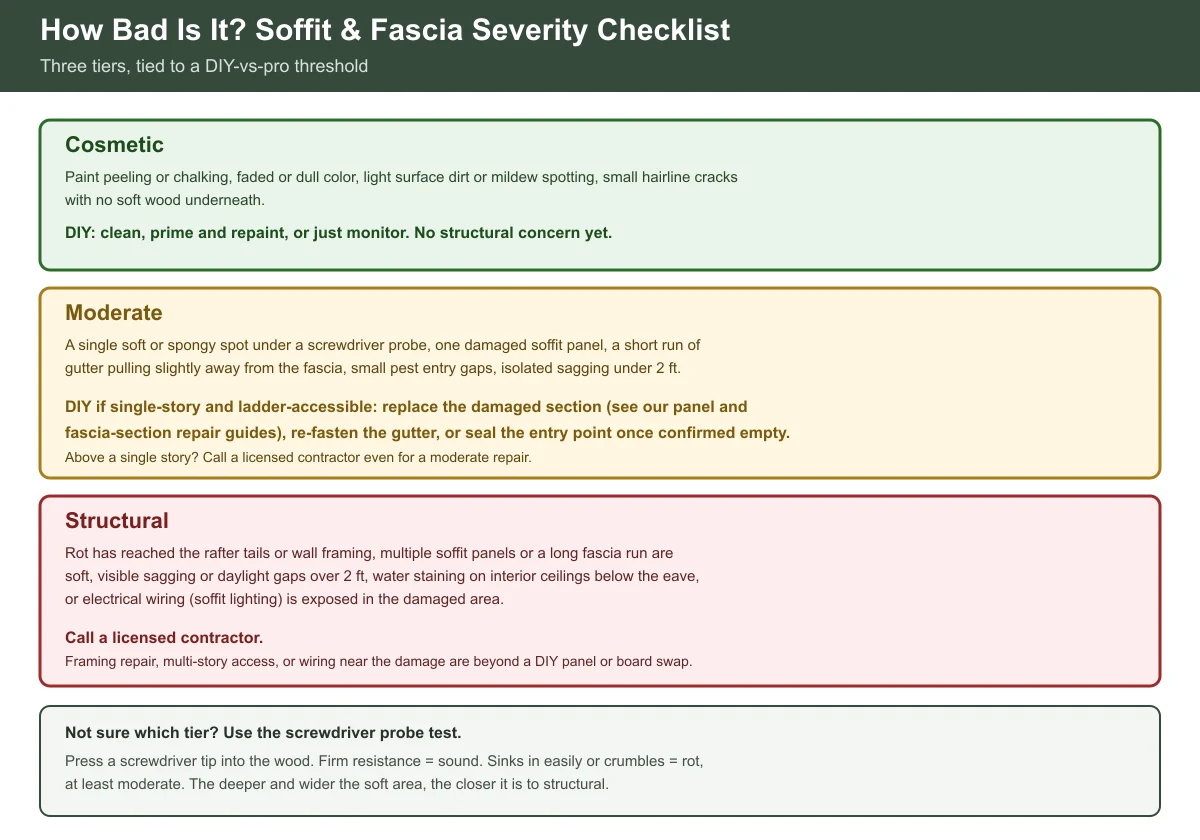
This checklist sorts common signs into three tiers, each tied to a clear next step. It’s an original synthesis built for this site, not a published standard — no single source grades soffit and fascia damage this way, so treat it as a practical guide rather than a code requirement.
| Tier | What you see | What to do |
|---|---|---|
| Cosmetic | Peeling or chalking paint, faded color, light surface dirt or mildew, hairline cracks with sound wood underneath | Clean, prime, and repaint, or simply monitor. No structural concern yet. |
| Moderate | One soft or spongy spot on the probe test, a single damaged soffit panel, a short run of gutter pulling slightly away, small pest entry gaps, isolated sagging under 2 ft | DIY if single-story and ladder-accessible: replace the damaged section, re-fasten the gutter, or seal the entry point once confirmed empty. Above one story, call a pro even for a moderate repair. |
| Structural | Rot reaching the rafter tails or wall framing, multiple panels or a long fascia run gone soft, sagging or daylight gaps over 2 ft, interior ceiling staining below the eave, exposed wiring in the damaged area | Call a licensed contractor. Framing repair, multi-story access, or wiring near the damage are beyond a DIY panel or board swap. |
Why does damaged soffit matter beyond looks?
Soffit isn’t just trim — on most houses, the vented sections are the intake side of the attic’s airflow system. Building Science Corporation’s technical guidance on attic ventilation explains that a continuous air path from the soffit intake to a ridge or gable exhaust is what keeps the roof deck cold enough in winter to limit ice-dam formation, and that air-sealing the attic floor matters just as much as having enough vent area. When soffit is damaged, blocked, or missing sections, that intake path gets interrupted. Moisture that would normally vent out can instead collect in the attic, which accelerates wood rot in the very framing the soffit and fascia are attached to — a damaged eave isn’t just a cosmetic problem, it can be a cause of worse damage happening out of sight.
Are pests a sign of damage, or a separate problem?
Both. Squirrels, wasps, and bees don’t create soft wood or gaps from nothing — they exploit openings that already exist, often where a soffit-to-fascia or soffit-to-wall seam has gapped, or where a board has softened enough to gnaw or push through. Finding an active nest or entry hole is itself evidence that the wood nearby has failed enough to let something in, so treat pest activity as a prompt to run the severity checklist on that section, not just a pest problem to solve on its own. For the removal side specifically, see our guides to squirrels in the soffit and wasps or bees in the soffit.
What should you do once you’ve identified the tier?
- Cosmetic: clean and repaint as part of normal exterior maintenance.
- Moderate, soffit: see how to replace a damaged soffit panel section.
- Moderate, fascia: see how to replace a short section of fascia board, or if the gutter itself is pulling away, gutter pulling away from the house.
- Not sure which part you’re even looking at: start with our soffit vs. fascia guide.
- Structural: get a licensed contractor to assess the framing before any cosmetic or panel-level fix is attempted.
Ladder safety for soffit and fascia inspections
Set the ladder’s base out 1 foot for every 4 feet of height (roughly a 75° angle), and let the top extend at least 3 feet above the roofline or landing point for a handhold. Keep three points of contact at all times, stay off the top three rungs, use a spotter if you can, and set up on solid, level ground in non-slip shoes. Never use a metal ladder near power lines. If the damage is above a single story, or you’re not confident reading the probe test, call a licensed contractor instead.
Frequently asked questions
How often should I inspect my soffit and fascia?
Once a year is a reasonable baseline for most homes, plus a check after any major storm, since wind-driven rain and ice are common triggers for new damage. Home inspectors already treat eaves, soffit, and fascia as a standard exterior check item for exactly this reason.
Can soffit damage cause problems inside the house?
Yes, indirectly. Because vented soffit is usually the intake side of attic ventilation, damage or blockage there can disrupt airflow and contribute to moisture buildup in the attic, which over time can show up as interior ceiling staining or accelerated rot in nearby framing.
Is a little bit of peeling paint on fascia urgent?
Not urgent by itself. Peeling paint is a cosmetic sign, and the wood underneath can still be perfectly sound. Run the screwdriver probe test to confirm — if the wood is firm, repainting is a maintenance task, not an emergency.
What’s the difference between a moderate repair and a structural one?
Scope and location. A moderate repair is contained to one panel, one short board section, or a loose gutter run, and the wood immediately around it is still sound. A structural problem has reached the rafter tails or wall framing, spans multiple panels or a long run, or involves exposed wiring — all reasons to bring in a licensed contractor rather than patch it yourself.
Why did my soffit or fascia fail faster than my neighbor’s?
Local exposure matters a lot: a north-facing eave that stays damp longer, overhanging tree limbs that drop debris and hold moisture against the wood, or a gutter that’s been clogged or pulling away for a while all accelerate rot independent of the age of the house.
Sources
- Building Science Corporation, BSD-102: Understanding Attic Ventilation — the soffit’s role as the intake side of attic airflow and the link between ventilation, moisture control, and ice-dam prevention. Checked November 13, 2026.
- InterNACHI (International Association of Certified Home Inspectors), Basic Home Inspection Checklist — confirms eaves, soffit, and fascia as a standard exterior inspection item that inspectors check for signs of delayed maintenance. Checked November 13, 2026.
If you haven’t yet confirmed which board you’re looking at, start with our soffit vs. fascia guide. Once you know the tier, the panel, board, and gutter repair guides linked above walk through the fix step by step.
soffitfasciafix.com Editorial Team. Last updated: November 13, 2026.

[…] More than a short run (a few feet) needs replacing, which usually points to a wider moisture or ventilation issue worth diagnosing first — see signs of soffit and fascia rot or damage. […]
[…] Signs of Soffit and Fascia Rot or Damage (and What to Do) […]