
Direct answer: A gutter pulling away from the house usually means the fascia board behind it has rotted and can no longer hold the hanger screws. Press a flat-blade screwdriver into the board near a hanger: if it sinks in easily, the wood is rotted and needs replacing before you re-hang the gutter.
Key takeaways:
- Gutter hanger screws pass through the gutter and into the fascia board, reaching the rafter tail behind it — sound fascia is structural, not just cosmetic, for holding a gutter up.
- Hanger spacing commonly runs 24-36 inches, tightened to 16-24 inches in heavy snow, wind, or rain regions — this is trade practice, not a fixed code number.
- A simple screwdriver probe test tells you whether the fascia under a sagging gutter is sound or rotted, without removing the gutter first.
- If the wood sinks easily under light pressure, re-fastening the gutter into that spot won’t hold — the board needs replacing first.
- Scope this test to a single-story, ladder-safe job; call a licensed contractor for rot you can’t safely reach or that runs along more than a short section.
Why Does a Gutter Pull Away From the House?
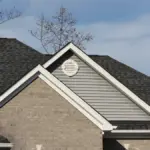
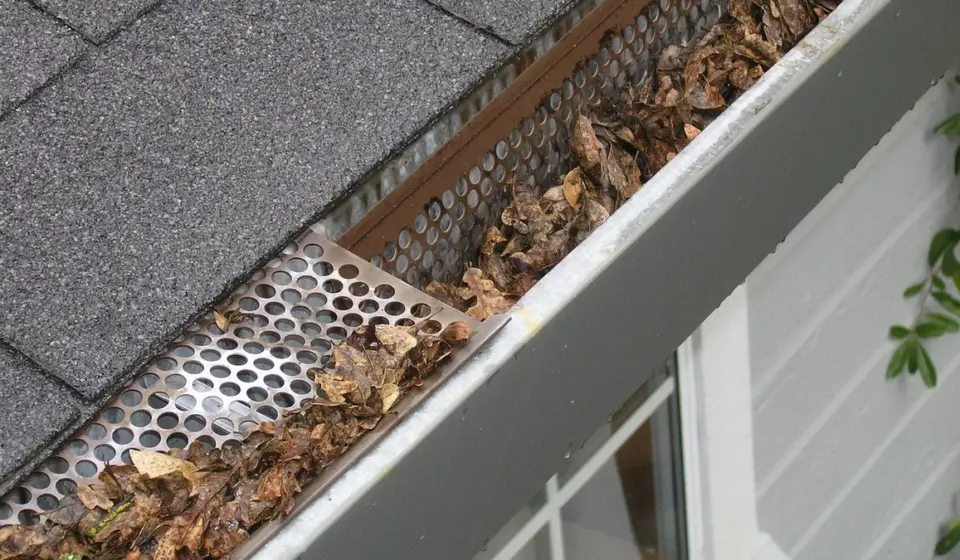
Gutters hang from fasteners (hidden hangers or spikes-and-ferrules on older systems) that go through the gutter and screw into the fascia board, and from there into the rafter tail behind it. That means the fascia isn’t just trim the gutter sits in front of — it’s the structural backing the whole gutter system hangs from. When the fascia rots, the screws no longer bite into solid wood, and the weight of the gutter (plus water, leaves, and ice) pulls the hangers loose, tilting or dropping the gutter away from the roofline.
A gutter can also pull away for reasons that have nothing to do with rot — hangers spaced too far apart for the climate, or a gutter overloaded with wet debris. That’s why the fastest way to figure out what’s actually wrong is to test the wood itself before assuming you need a full fascia replacement.
How Do You Test the Fascia for Rot?
The screwdriver probe test is a quick, low-cost way to check whether fascia is sound before you decide whether to re-fasten the gutter, wrap the board, or replace it. It’s widely described in gutter and fascia repair guidance, but rarely walked through step by step — here’s the full sequence, scoped to a single-story ladder job.
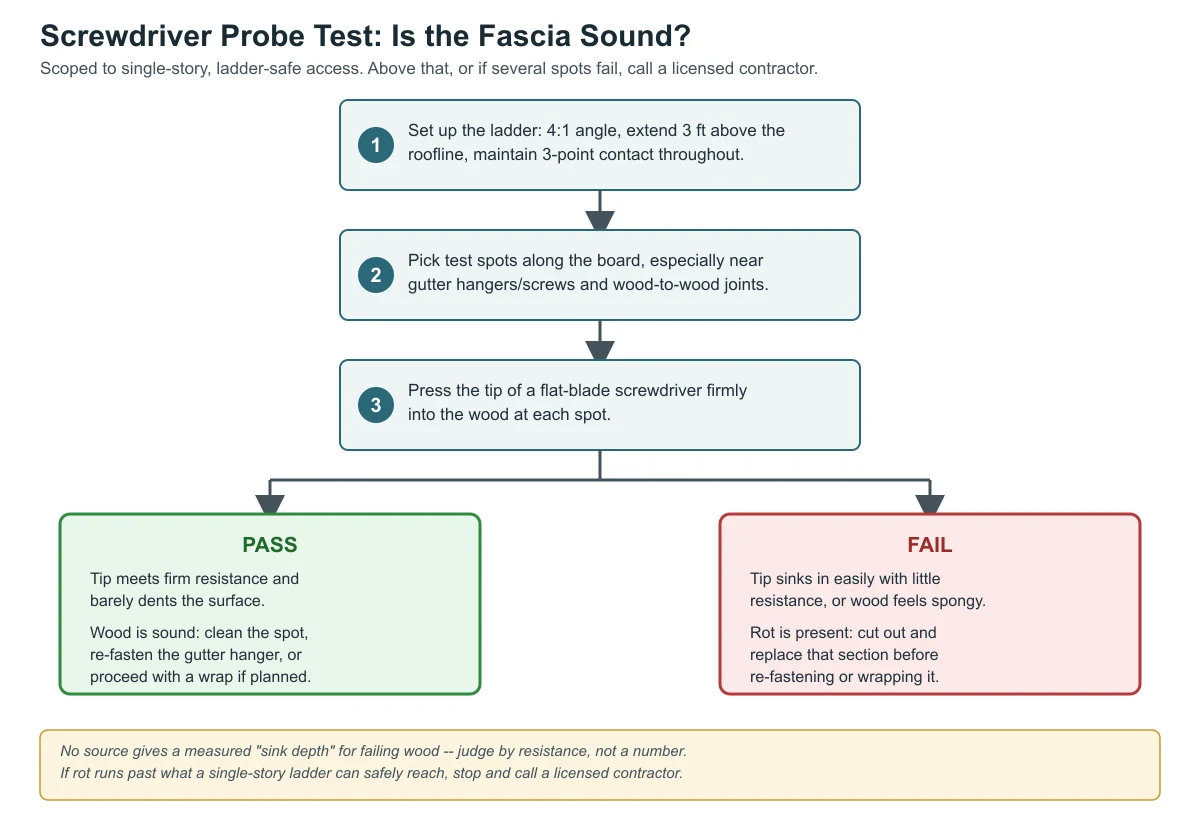
- Set up the ladder safely: base out 1 ft for every 4 ft of height (about a 75.5° angle), extended at least 3 ft above the roofline for a handhold, with three points of contact maintained throughout.
- Pick a few test spots along the board, especially right next to the gutter’s hanger screws and at any wood-to-wood joints or visibly discolored areas.
- Press the tip of a flat-blade screwdriver firmly into the wood at each spot.
| Result | What you feel | What it means | What to do |
|---|---|---|---|
| Pass | Tip meets firm resistance and barely dents the surface | Wood is sound | Clean the spot, re-fasten the gutter hanger, or proceed with a wrap if planned |
| Fail | Tip sinks in easily with little resistance, or the wood feels spongy or crumbly | Rot is present | Cut out and replace that section before re-fastening or wrapping it |
No source gives a precise measured “sink depth” that separates sound wood from rotted wood — judge this by resistance and feel, not a number. If one spot fails, test a foot or two in either direction to find out roughly how far the rot extends before you decide whether this is a patchable section or a longer run.
How Far Apart Should Gutter Hangers Be?
Hanger spacing is generally described as 24 to 36 inches for standard conditions, tightened to a 16-to-24-inch spacing in regions with heavy snow load, high wind, or heavy rainfall, since more hangers spread the load across more fastening points. For 6-inch or copper gutters, which weigh more when full, a heavier screw — commonly a #10 x 2-1/2 inch — is used so it reaches solidly into the rafter tail behind the fascia, not just the fascia board’s face. These figures vary a bit from source to source and aren’t a single fixed code number; treat them as trade practice tied to your local climate and gutter size rather than a strict rule.
What Do You Do If the Fascia Is Sound?
If the probe test passes, the fascia itself is fine — the problem is almost always the hangers. Re-fasten loose hangers into solid wood near where the old screw holes are (offsetting slightly if the old hole is enlarged), and check that spacing along the whole run matches the ranges above for your climate and gutter weight. If you’re also considering covering the fascia for a cleaner, lower-maintenance finish once it’s confirmed sound, see our guide to whether wrapping fascia with aluminum is worth it — it uses this same probe test as the go/no-go check.
What Do You Do If the Fascia Is Rotted?
A failed probe test means that section of fascia needs to come out before the gutter goes back up — screwing a new hanger into rotted wood just repeats the failure. For a short rotted section on a single-story eave, see our guide to replacing a short section of fascia board, which covers cutting the patch at solid rafter-tail backing. If the rot runs along most of a run, or you’re finding soft wood at several test spots in a row, that’s usually a sign of a longer-standing moisture problem rather than one bad board — our guide to signs of soffit and fascia damage covers how to judge the overall severity.
When Should You Call a Professional?
Treat this as a single-story, ladder-safe DIY diagnostic and repair. Call a licensed contractor instead when any of the following apply: the gutter or fascia is above what a properly set-up extension ladder can safely reach, the rot extends along more than a short section, the fascia has pulled away enough that the roof deck or soffit above it looks affected, or there’s any sign the rafter tails themselves (not just the fascia board) have softened. Standard ladder safety always applies: correct 4:1 angle, at least 3 ft of ladder above the landing point, three points of contact, no standing on the top three rungs, a spotter, solid and level footing, and never a metal ladder near power lines.
Frequently Asked Questions
Can you just re-screw a sagging gutter back onto the fascia?
Only if the fascia itself is sound. Run the screwdriver probe test near the existing hanger holes first — if the wood passes, re-fastening into solid wood nearby (not the exact same worn hole) usually solves it. If the wood fails the test, a new screw in rotted wood will pull loose again under the same load.
How do you know if it’s the fascia or just loose hangers?
The probe test answers this directly. If the screwdriver meets firm resistance at multiple spots along the sagging section, the hangers themselves — spacing, fastener size, or wear — are the more likely cause. If it sinks in easily, the fascia has rotted and needs replacing before the gutter will hold.
How often should gutter hangers be spaced?
Commonly 24 to 36 inches apart under standard conditions, tightened to 16 to 24 inches in areas with heavy snow, wind, or rain, since closer spacing distributes the load across more fasteners. These are trade-practice ranges rather than a single fixed code requirement, so check what’s typical for your climate and gutter size.
Does wrapping fascia with aluminum fix a gutter that’s pulling away?
No — a wrap covers and protects sound wood, it doesn’t repair rot that’s already there. If the fascia under a sagging gutter fails the probe test, the rotted section needs to be cut out and replaced first. Wrapping is a finishing step for wood that’s already confirmed solid, covered in our aluminum fascia wrap guide.
Sources
- Fascia Board and Gutters, The Roofing Brief
- How to Secure Gutters to Your House: Hangers, Spacing, and Safe Installation, Rescreening Masters
- Gutter Hangers, All Gutter Inc.
For the full picture of how soffit and fascia relate and where problems usually start, see our pillar guide: soffit vs. fascia, what they are and how to fix problems.
soffitfasciafix.com Editorial Team. Last updated: November 13, 2026.