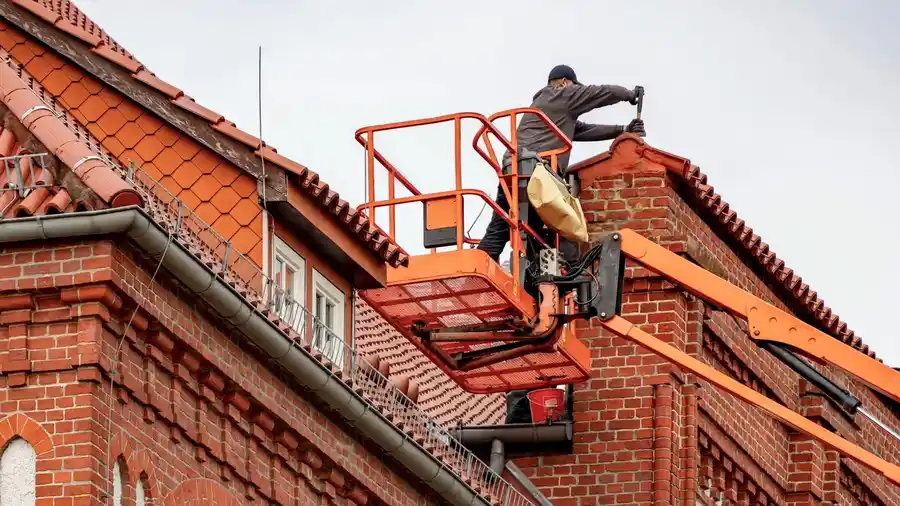
Should you repair soffit and fascia yourself or hire a pro

Last updated: November 16, 2026
Quick Answer: If the job is limited to 1 small, low section with solid wood and easy access, DIY may be reasonable; if the roof edge is high, the wood is soft, or the damage may be structural, hire a pro. I know this work by the failure pattern, not just the trim: should you repair soffit and fascia yourself or hire a pro is often decided by access, hidden damage, and fall risk, not by the visible board alone.
Key takeaways
- Small surface fixes near the ground are often the easiest DIY jobs, but they are not automatically safe.
- A ladder changes the decision fast, especially once the work is near the roof edge.
- Soft wood, sagging sections, or repeated leaks point to a deeper problem.
- The biggest risk is not the trim itself; it is missing rot, unstable edges, or a fall.
- If the job needs roof access, structural judgment, or more than basic hand tools, a contractor is the better choice.
What is the real decision here?
The real decision is not “Can I touch up trim?” It is “Can I do this without missing rot, creating a fall risk, or making the roof edge worse?” Soffit and fascia repair is often a three-part job: access, diagnosis, and repair. If any one of those needs more than a ladder and basic tools, hiring a pro makes more sense.
For a simple split board, a loose fastener, or a small patched area, DIY can be reasonable. For a section that feels soft, looks swollen, or sits under a gutter that has already pulled away, the repair may involve hidden damage behind the face board. That is where a contractor is usually the better choice, because the visible problem can be the smallest part of the job.
The safer first check is simple: look from the ground, then inspect from a stable position only if you can do it without stretching or overreaching. OSHA ladder guidance for construction work explains that ladder setup and safe use matter as much as the repair itself, and the Consumer Product Safety Commission also treats roof and ladder falls as a serious home hazard. Consult a qualified professional if the setup is awkward or the cause is unclear, because OSHA and the CPSC both warn that access problems can turn a small job into a serious one.
Should you do it yourself?
DIY wins only when the job stays small, low, and obvious. That means one damaged section, solid surrounding wood, and no sign that the roof edge or framing is part of the problem. If the fix is limited to replacing a short run of fascia, reattaching a loose soffit piece, or sealing a minor gap at a reachable height, a careful homeowner may handle it.
The upside is control. You can inspect the area, work slowly, and stop if the repair grows. The downside is that soffit and fascia are easy to misread. A board can look like a surface problem while the real issue is water intrusion, nail failure, or damage behind the trim. If you only patch the face and ignore what is behind it, the same failure comes back.
DIY also makes sense only if you already own or can safely use the basic tools and safety gear for the job. That usually means a stable ladder, eye protection, gloves, and a plan that keeps both hands free when climbing. If the repair needs roof access, cut lumber, or work in a narrow space where balance is poor, the job has already moved past the easy DIY line.
Because of that, should you repair soffit and fascia yourself or hire a pro becomes a question of access first and craftsmanship second. A low repair with 1 damaged section is one thing. A higher repair with unclear damage is another.
When does a contractor make more sense?
A contractor wins the moment the job stops being only trim repair. If the fascia is soft, the soffit is sagging, the gutter has detached, or the roof edge looks uneven, the repair may involve structural judgment, not just carpentry. That is not a place for guessing. A pro is better equipped to tell the difference between a cosmetic fix and a problem that reaches the roof edge or framing.
This is also the right choice when access is the issue. Once the work is high enough that the ladder feels awkward, the risk climbs faster than the repair value. A lot of homeowners can handle a 1-step or ground-level task; far fewer can safely manage work near the eaves while holding tools and materials. The ladder becomes the job, and that is a bad sign.
Time matters too. A repair that should take one focused visit can stretch into a long project if the wood is hidden, the fasteners are stripped, or the old material comes off in worse shape than expected. A contractor is the better fit when the work needs more than one pass, because stalled repairs leave the roof edge exposed.
If the problem may be structural, it is better to hire a licensed contractor than to guess. That is especially true when the repair could affect ventilation, weather protection, or framing.
The honest side-by-side
DIY and hiring a pro are not close calls for the same type of problem. DIY is for low-risk surface work. A contractor is for height, hidden damage, and anything that might touch the roof edge or framing.
| Criteria | DIY | Contractor | Winner for which condition |
|---|---|---|---|
| Access height | Best only when the area is low and easy to reach | Better for upper-story work and awkward rooflines | Contractor for high or awkward access |
| Safety gear | Depends on homeowner discipline and ladder setup | Comes with work practices built around the job | Contractor when fall risk is real |
| Tool needs | Fine for basic trim work | Better when cutting, fastening, and removal get more complex | DIY for simple fixes |
| Structural risk | Easy to miss hidden rot or water damage | Better at spotting deeper problems | Contractor when wood feels soft |
| Time commitment | Can be quick if the damage is minor | Better when the job may expand after opening it up | Contractor for uncertain repairs |
| Scope creep | Hard to judge once the board comes off | More likely to handle surprises in one visit | Contractor for layered damage |
| Cost control | More control over small material-only fixes | Less control, but less chance of doing it twice | DIY for very small repairs |
| Confidence level | Good if the problem is obvious | Better if the cause is unclear | Contractor when the cause is unclear |
| Roof-edge exposure | Riskier if the repair touches the edge | Better suited to edge repairs | Contractor for roof-edge work |
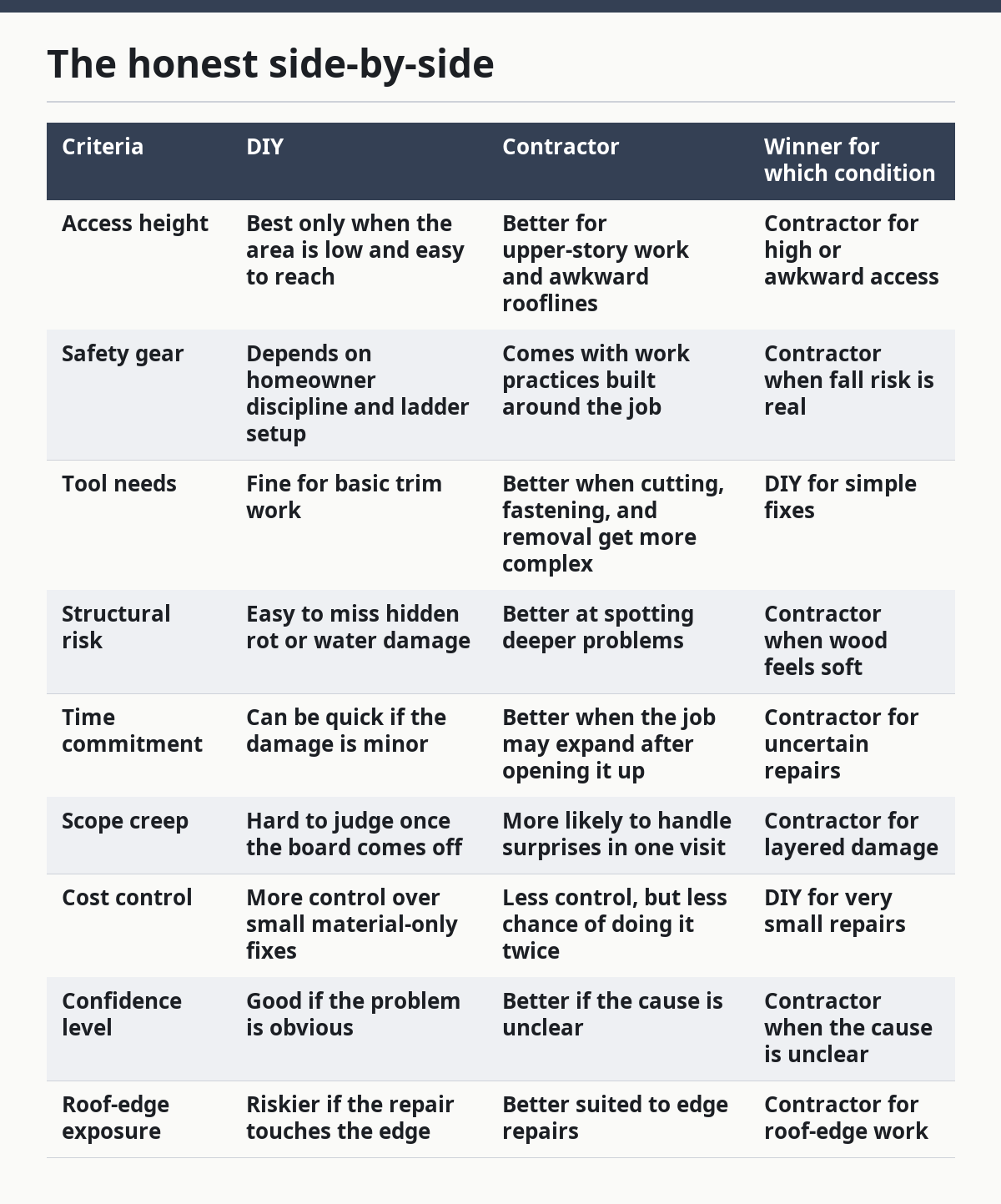
The table points to the same rule every time: DIY only wins when the problem is visible, local, and low. The second the job involves a roof edge, soft wood, or a ladder that feels borderline, the contractor side becomes the safer pick. For planning the repair itself, it also helps to compare the work to roof edge repair guidance and home ladder safety rules.
What changes the decision fast?
A few exception scenarios flip the choice right away. First, if the fascia supports a gutter that is sagging or pulling loose, I would not stay in DIY mode. That setup can hide repeated water damage, and the gutter load can make the repair more than a trim issue.
Second, if the soffit panel is damaged in a way that suggests ventilation or moisture trouble, the visible break may not be the main problem. Soffit is there under the eaves for a reason, and a bad repair can trap moisture or leave an opening that invites more damage. If the moisture source is not obvious, consult a professional and review ventilation basics before you start.
Third, if the work sits where the ladder would need to rest on unstable ground, the job should move to a pro. A good repair plan means nothing if the setup is unsafe before the first board comes off. OSHA ladder rules exist because small slips become big falls very fast.
Fourth, if the damage is widespread across multiple sections, the repair stops being a simple homeowner fix. At that point, the time cost and the chance of missing hidden rot usually outweigh the appeal of doing it yourself.
What should you check before deciding?
Check the problem in this order: first, look for soft wood or sagging; second, check how high the work sits; third, decide whether the fix touches the roof edge; fourth, decide whether you can do the job with basic tools and safe ladder access. That sequence keeps the decision grounded in risk, not guesswork.
If the board is solid, the damage is small, and the repair is within comfortable reach, DIY may be enough. If the wood is soft, the section is high, or the damage seems tied to water intrusion, hire a pro. That is the clean line. The more uncertain the cause, the less sense it makes to treat soffit and fascia as a simple weekend fix, and it is smarter to consult a professional than to force a diagnosis.
For readers who want the broader hiring-and-pricing context, the hub on soffit and fascia work fits after this decision is made, not before it. This page is about choosing the right path; pricing only matters after the risk is clear.
The verdict
Choose DIY if the damage is small, low, visible, and limited to a surface fix you can reach without awkward ladder work. Choose a pro if the work is high, the wood is soft, the gutter is involved, or the roof edge may have hidden damage. Neither if the setup makes you stretch, balance badly, or guess about rot.
What repairs are safe for DIY?
Small, low, clearly visible fixes are the most practical DIY jobs. That usually means a loose piece, a short damaged section, or a simple surface repair where the surrounding wood is still solid. If the repair needs roof access, hidden inspection, or removal of soft material, it is no longer a comfortable DIY task.
When is professional help safer?
Professional help is safer when the damage may reach beyond the trim. Soft wood, sagging fascia, a loose gutter, or signs of water intrusion are all reasons to stop. A contractor is also the safer choice when the ladder setup is unstable or the repair sits high under the eaves.
Does height change the decision?
Yes, height changes the decision quickly. The higher the work sits, the less room there is for error, and the more likely the job needs proper setup, steadier footing, and better access. Once the ladder feels risky or the roof edge is hard to reach, hiring a pro is the better call.
Drafted with AI; not yet reviewed by a person.


[…] this is common. Soffit and fascia are separate components, and pairing vinyl soffit with aluminum fascia (or any other combination) […]
[…] Soffit and fascia prices are driven less by square footage than by damage hidden behind the trim. […]
[…] check using binoculars, then move to a ladder only if the area looks stable and dry. A careful soffit and fascia inspection looks for sagging, gaps, moisture, blocked vent openings, and pest activity before any […]