
Last updated: November 16, 2026
Quick answer: there are 2 main default picks here: vinyl for most homeowners, and aluminum for long, straight roof edges or harsher temperature swings. Vinyl soffit is the better pick for most homeowners who want lower upkeep and simple handling; aluminum soffit is the better pick when heat, long runs, or a stiffer metal finish matter more. The choice comes down to climate, venting needs, and how much maintenance you want to accept around the fascia.
Key takeaways
- Vinyl soffit usually wins for basic upkeep and easier cutting on site.
- Aluminum soffit usually wins where a more rigid panel and metal finish matter.
- Vented panels matter as much as the material, because soffit has to work with the fascia and attic airflow.
- Expansion and contraction is the big vinyl trade-off; dents and touch-ups are the big aluminum trade-off.
- If the soffit area is hard to reach, choose the material that is least likely to need frequent spot repairs.
What is the real difference between vinyl and aluminum soffit?
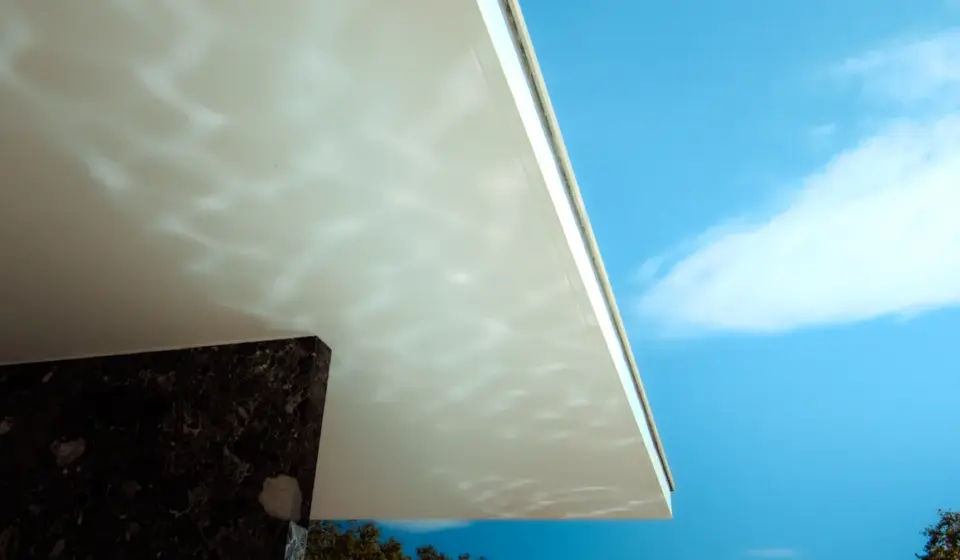
To put it simply, vinyl soffit is lighter and less fussy to maintain, while aluminum soffit is stiffer and better suited to long, exposed runs. Both are common choices for the underside of roof overhangs, and both can be made as vented panels that support attic airflow.
In practice, vinyl tends to be favored for straightforward residential work where ease of handling matters. Aluminum tends to be favored where a more rigid surface is useful, especially near fascia boards and larger eaves.
One detail that gets skipped too often: soffit is not just decoration. It works with the fascia and the rest of the roof edge. The material choice affects not only the look of the eave, but also how the edge handles movement, fastening, and future repair. For a broader materials overview, the soffit and fascia materials and design choices discussion covers the larger decision tree.
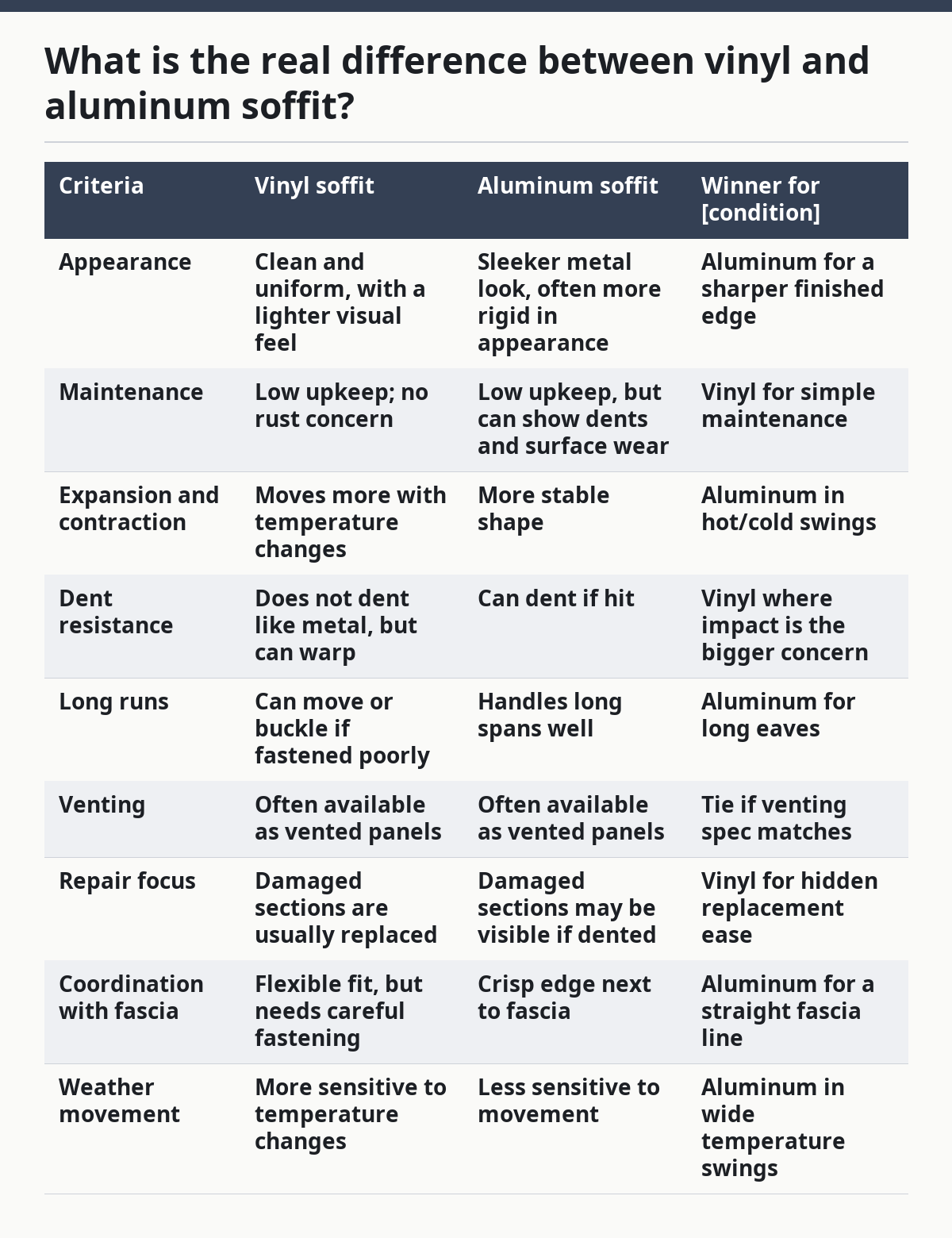
| Criteria | Vinyl soffit | Aluminum soffit | Winner for [condition] |
|---|---|---|---|
| Appearance | Clean and uniform, with a lighter visual feel | Sleeker metal look, often more rigid in appearance | Aluminum for a sharper finished edge |
| Maintenance | Low upkeep; no rust concern | Low upkeep, but can show dents and surface wear | Vinyl for simple maintenance |
| Expansion and contraction | Moves more with temperature changes | More stable shape | Aluminum in hot/cold swings |
| Dent resistance | Does not dent like metal, but can warp | Can dent if hit | Vinyl where impact is the bigger concern |
| Long runs | Can move or buckle if fastened poorly | Handles long spans well | Aluminum for long eaves |
| Venting | Often available as vented panels | Often available as vented panels | Tie if venting spec matches |
| Repair focus | Damaged sections are usually replaced | Damaged sections may be visible if dented | Vinyl for hidden replacement ease |
| Coordination with fascia | Flexible fit, but needs careful fastening | Crisp edge next to fascia | Aluminum for a straight fascia line |
| Weather movement | More sensitive to temperature changes | Less sensitive to movement | Aluminum in wide temperature swings |
Vinyl soffit: who should actually use it?
Vinyl soffit wins for homeowners who want a simple, low-maintenance choice and do not want to spend time worrying about surface rust or corrosion. It is also the better fit when the priority is a clean residential look rather than a metal finish.
Its main strength is convenience. Vinyl is lightweight, and that helps when the soffit area is awkward to reach or the run is short. Vented vinyl panels are common, which matters because airflow at the eaves is part of the system, not an optional detail. If the roof edge and fascia already need a tidy, low-drama finish, vinyl keeps the job plain.
Because vinyl is lightweight, it also helps on smaller jobs where cutting and lifting matter more than a rigid finish. The weakness is movement. Vinyl expands and contracts more with temperature changes than aluminum, so fastening and fit matter. If the panels are installed too tightly, they can buckle, ripple, or look uneven later. That makes vinyl a poor choice for a homeowner who wants the least possible risk of visible movement on long runs or in areas with wide temperature swings.
Vinyl is not the first pick for someone who wants a metal edge, a stiff panel, or a more rigid look against the fascia. It is also not the best choice where the soffit is likely to take repeated impact, such as a location that gets hit by ladders, stored materials, or heavy tree activity. The upside is real, but it depends on the installation being done with room for movement.
Aluminum soffit: when does it win?
Aluminum soffit wins when the roofline needs a stiffer material that stays straighter across longer spans. That makes it a strong option for homes where the fascia line is prominent and the eaves need to look crisp from the ground.
Its biggest advantage is stability. Aluminum moves less with temperature change than vinyl, so it is often a better fit in places with stronger heat or cold swings. It also pairs well with vented panels, which keeps it in the same practical category as vinyl for attic airflow. The difference is that aluminum tends to keep its shape better.
On long runs, that extra stability can matter more than a lighter weight. The trade-off is denting. Aluminum can take visible damage from impact, and a dent near the fascia is hard to ignore once it is there. It is also less forgiving if someone wants a softer, more flexible material to cut and fit in tight spots. That makes it a weaker choice for a homeowner who expects the soffit area to get bumped or handled often.
Aluminum is not the material for someone who wants zero cosmetic risk. It also is not the best pick if the project is small and the main goal is quick, easy handling. But if the roof edge is long, straight, and meant to look sharp beside the fascia, aluminum has the edge.
The honest side-by-side
Put side by side, vinyl soffit is the easier choice for a standard home where maintenance matters more than a metal finish. Aluminum soffit is the better choice where straight lines, stability, and a firmer panel matter more. The better material depends on what problem the soffit has to solve, not on which one sounds tougher.
A few criteria matter more than the rest: movement, appearance, repair behavior, and how the soffit works with vented panels near the fascia. Those are the reasons the decision changes from house to house. A material that looks fine in a sheltered eave can look wrong on a long front elevation.
| Criteria | Vinyl soffit | Aluminum soffit | Winner for [condition] |
|---|---|---|---|
| Upkeep | Easy to live with | Easy to live with | Vinyl for low-fuss owners |
| Straightness over distance | Can show movement if fitted poorly | Holds a straighter line | Aluminum for long runs |
| Look near fascia | Casual, clean finish | Sharper, more rigid finish | Aluminum for a crisp edge |
| Temperature behavior | More expansion and contraction | Less movement | Aluminum in variable climates |
| Visible damage | Can warp or sag if misfit | Can dent | Vinyl where dents are the bigger worry |
| Vented-panel use | Common | Common | Tie |
| Installation forgiveness | More forgiving in short sections | Less forgiving of dents, but stable | Vinyl for easier handling |
| Repair visibility | Replacement sections can blend well if matched | Dents can stay visible | Vinyl for small future repairs |
For homeowners who want the fewest surprises, vinyl is the safer default. For homeowners who care about a tighter, more rigid look and are willing to accept dent risk, aluminum is the stronger material. The fascia line is part of the call here: if the soffit and fascia have to read as one clean edge, aluminum usually looks more deliberate.
How do maintenance and repair needs compare?
In maintenance terms, vinyl soffit usually asks less from the owner, but aluminum soffit can stay presentable longer in the right setting. That sounds like a contradiction until the type of damage is separated from the amount of care.
Vinyl does not rust, and that makes routine care simple. The downside is that heat movement can create ripples or looseness if the panels were pinned down too tightly. When damage happens, replacement is often the cleaner path than patching, since the panel is a finished surface. That is manageable, but it does mean the material does not love being overhandled.
By contrast, aluminum also avoids rust in the way steel would not, and it works well as a low-maintenance exterior material. The real problem is impact. A dented aluminum soffit panel can remain visibly dented, especially on a front elevation where the fascia line is in plain sight. That creates a cosmetic issue rather than a structural one, but homeowners notice cosmetic issues fast.
For anyone who wants to minimize future fuss, the better question is not “Which one needs less care?” It is “Which one can tolerate the kind of damage this house is most likely to get?” If the risk is thermal movement, aluminum is safer. If the risk is impact during access, vinyl is easier to live with.
Which one should I choose?
If you want the simplest default, choose vinyl soffit for lower upkeep, lighter handling, and a more forgiving fit on smaller projects. Choose aluminum soffit if you want better stability across long runs, a stiffer finish near the fascia, and less concern about expansion and contraction. Neither if the real problem is failing fascia, trapped moisture, or a roof edge that needs a larger repair plan first.
That is the cleanest call for this comparison. Vinyl is the default recommendation for most homeowners because it solves the common soffit job without adding much upkeep. Aluminum is the better specialist choice when the edge has to stay straighter, longer, and more rigid.
The wrong choice is easy to spot. Vinyl is wrong when the run is long, the climate swings hard, or the homeowner wants a firmer exterior line. Aluminum is wrong when impact risk is high, the owner wants the simplest possible upkeep, or the job calls for a softer, more forgiving panel. If the fascia itself is damaged, talk to a qualified roofing or exterior contractor before choosing either soffit material, because the fascia may need repair first. The wrong material choice cannot fix a failed substrate.
When does the verdict flip?
Because the house drives the decision, the verdict flips when the house, not the material, is driving the problem. In a hot-cold climate with long eave runs, aluminum often becomes the safer bet because it handles movement better. That is a real advantage when a straight line matters more than easy handling.
The verdict also flips if the soffit area gets bumped often. A carport, a low overhang near storage, or a spot with frequent ladder contact changes the balance. In that case, vinyl can be the smarter pick because it avoids the dent problem that makes aluminum look worn fast.
A third flip happens when the goal is visual consistency with a metal fascia detail. If the roof edge already uses a sharper metal look, aluminum fits that language better than vinyl. A fourth flip happens when the project is small and the owner wants the least complicated material to handle and replace later. Then vinyl earns the nod.
For technical grounding, the Aluminum Association and the Vinyl Siding Institute both explain how aluminum and vinyl behave as exterior building materials. Their guidance helps show why movement, finish, and fastening matter in edge trim systems. For venting and roof-edge airflow, the key is to think in terms of the whole assembly, not just the panel material. In many homes, that assembly includes the fascia, soffit, and attic ventilation path.
FAQ
Is vinyl soffit cheaper to maintain than aluminum soffit?
Yes. Vinyl usually needs less day-to-day attention because it does not rust and it is easy to replace in sections. Aluminum also has low upkeep, but dents can remain visible.
Which material handles long runs better?
Aluminum usually handles long runs better because it stays straighter and moves less with temperature changes. That is why it often suits prominent rooflines.
Can both materials be vented?
Yes. Both vinyl and aluminum soffit are commonly available as vented panels, and venting matters because soffit supports attic airflow.
What should I check before replacing soffit?
Check the fascia, moisture issues, and attic ventilation first. If the fascia is damaged, consult a professional before choosing a new soffit material.
Which one is better for small jobs?
Vinyl usually is easier to handle on small jobs because it is lighter and more forgiving to cut and fit on site.
Drafted with AI; not yet reviewed by a person.



[…] wood, and sagging lines are all signs that the material is not just ugly; it is failing. If the soffit is damaged too, the job can spread fast because one bad edge often feeds another. In that case, replacing the […]