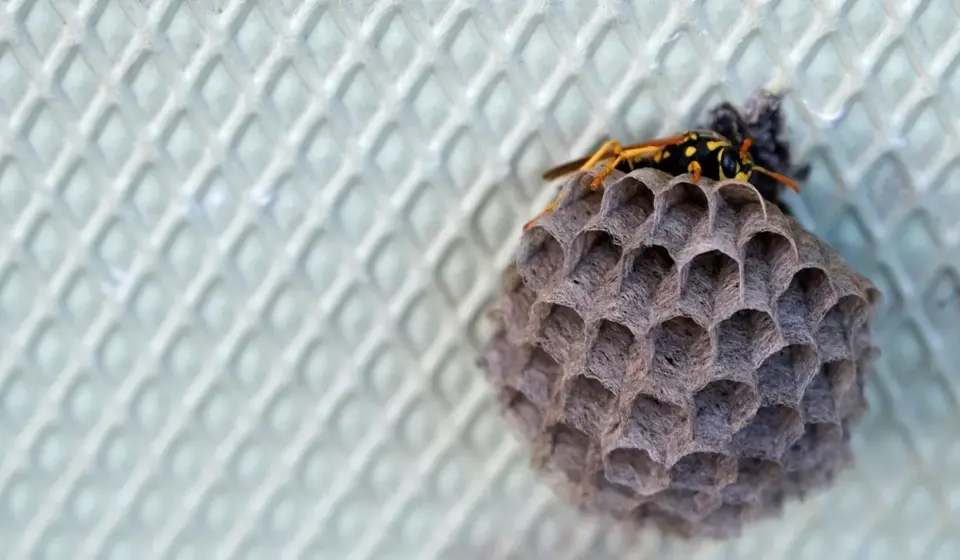

First, tell a bee from a wasp: fuzzy and rounder usually means bee, smooth and narrow-waisted usually means wasp or hornet. Don’t spray bees — contact a local beekeeper or extension office instead. For wasps or hornets, treat an exposed nest with an EPA-registered wasp and hornet spray in the early morning or late evening, standing to the side and as far back as the label allows.
Key takeaways
- Bees and wasps need different responses. Don’t spray bees — contact a local beekeeper or your county extension office instead.
- For wasps or hornets, use only an EPA-registered wasp and hornet insecticide and follow its label exactly.
- Treat in early morning or late evening when the insects are least active, or at night with a red-filtered flashlight (University of New Hampshire Extension).
- Stand to the side of the nest, never directly underneath, and stay as far back as the label allows — most products reach 10 to 20 feet.
- An enclosed nest with no visible opening, a nest above one story, or a large or long-established nest all call for a licensed pest control professional.
Is it a bee or a wasp nesting in the soffit?
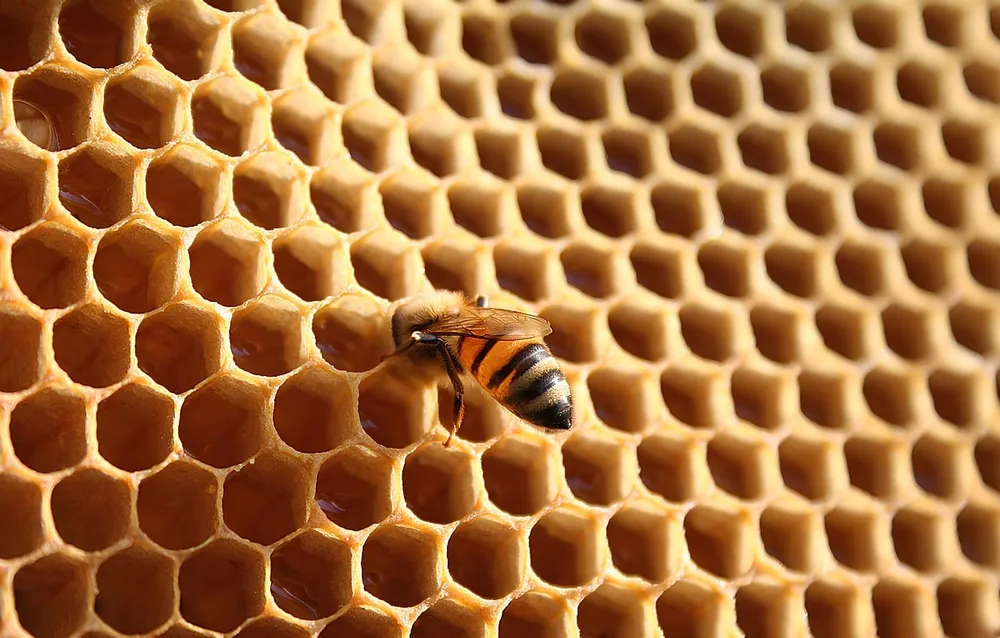
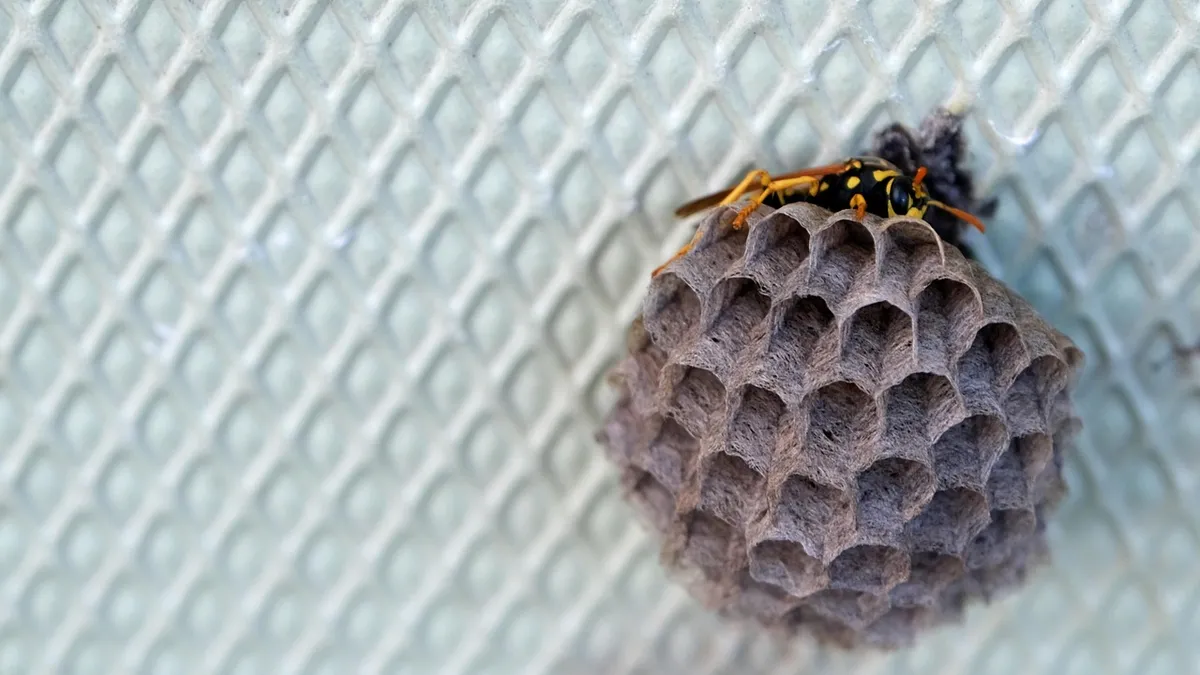
This is the first question to answer, because the right response is completely different depending on the insect. Bees are generally fuzzy-bodied and rounder; wasps and hornets have smoother, more sharply narrow-waisted bodies, and their paper nests look different too — a wasp nest has a distinctive open, umbrella-like honeycomb structure, often gray and papery, while honey bees build wax comb and tend to stay hidden inside a wall or soffit cavity rather than hanging an exposed nest.
North Carolina State Extension’s pollinator program is direct about what to do with bees found in a structure: don’t spray them. Instead, contact your local Cooperative Extension office or a chapter of your state’s beekeepers association, since some local beekeepers are willing to remove a colony from inside a wall or soffit for a fee. University of New Hampshire Extension makes the same point — bees are valuable pollinators, and a local beekeeper, or your county extension office if you don’t know one, is the better first call than an insecticide.
Decide before you treat: the 4-question checklist
The graphic and table below walk through the same four questions. Answer them in order before doing anything to a nest.
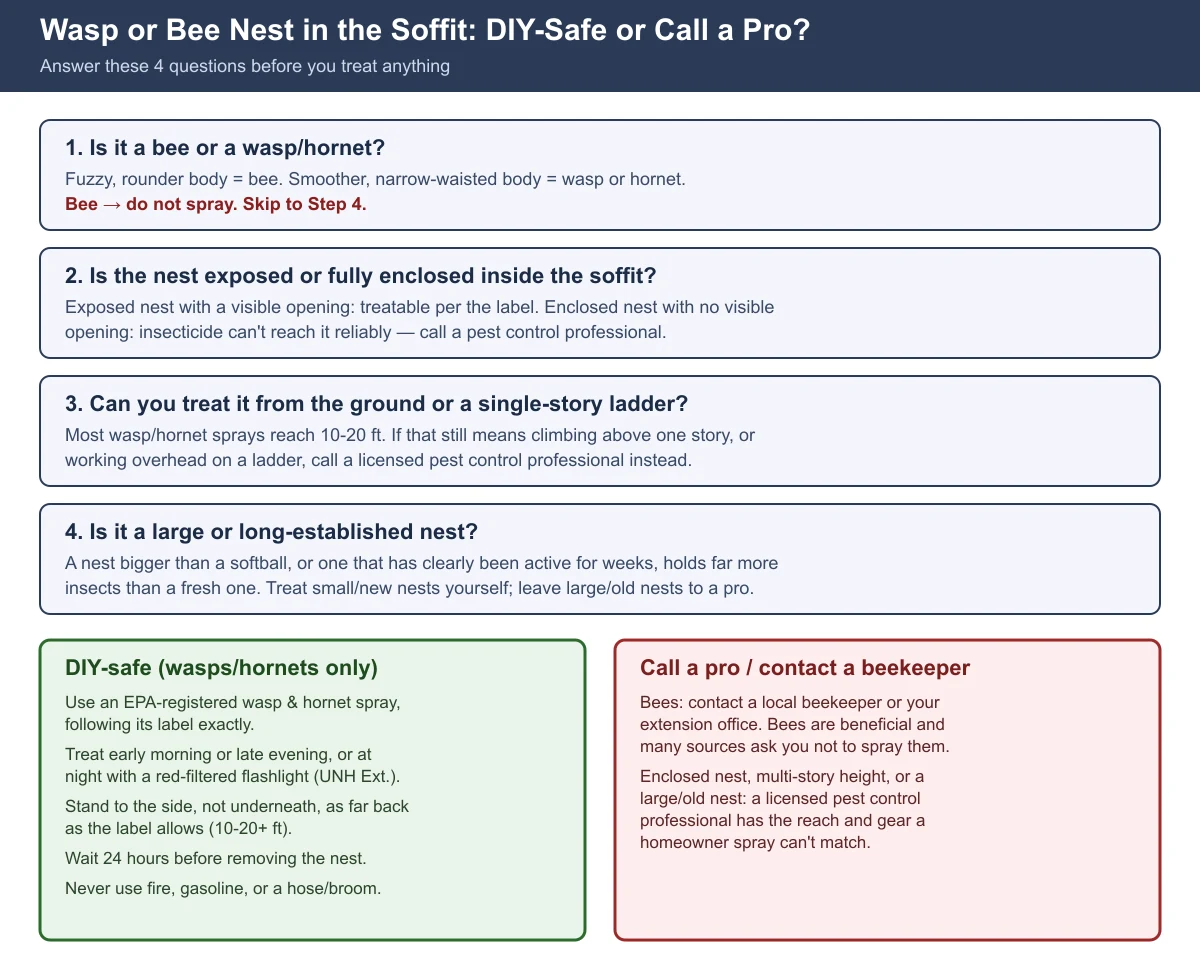
| Question | If the answer points to DIY | If the answer points to a professional |
|---|---|---|
| 1. Bee or wasp/hornet? | Wasp or hornet, with a visible paper nest | Bee of any kind — contact a beekeeper or extension office instead |
| 2. Exposed or enclosed nest? | Exposed nest with a clearly visible opening | Enclosed nest inside the soffit cavity with no visible opening — spray can’t reach it reliably |
| 3. Reachable from the ground or a single-story ladder? | Yes, within the label’s spray distance (10-20+ ft) | No — multi-story height or awkward overhead reach |
| 4. Nest size and age? | Small, newly started nest | Larger than a softball, or clearly active for weeks |
How do you safely treat an exposed wasp or hornet nest?
If the nest is an exposed wasp or hornet nest, reachable from the ground or a single-story ladder, and small enough to be a reasonable DIY job, follow the label on an EPA-registered wasp and hornet insecticide exactly — it is written for that specific product’s spray pattern and reach, and overrides any general tip here. A few points show up consistently across extension guidance and EPA label language:
- Timing: University of Vermont Extension recommends spraying in the late evening just before dark, or very early morning before workers have left the nest to forage, when the colony is least active and most of the workers are inside.
- Night treatment: University of New Hampshire Extension notes that if you treat after dark, use a flashlight fitted with a red filter to see the nest — wasps don’t see red light well, so a red-filtered light is less likely to trigger a defensive response than a plain white light.
- Distance and position: UNH Extension advises standing to the side of the nest rather than directly underneath it. Most wasp and hornet sprays are designed to reach 10 to 20 feet, so stand as far back as the label and that reach allow.
- After treating: Leave the nest alone for at least 24 hours before removing it, to make sure activity has actually stopped.
Never knock down an active nest with a broom, stick, or garden hose, and never use fire, gasoline, kerosene, or any other flammable liquid on a nest — all of these provoke a mass defensive response without reliably killing the colony, and fire or flammable liquids near a wood soffit and roofline is also a fire risk in its own right.
When does a soffit wasp or bee problem need a professional?
Call a licensed pest control professional (or, for bees, a local beekeeper) when any of these apply: the nest is a honey bee colony rather than wasps or hornets; the nest is fully enclosed inside the soffit cavity with no visible opening, so a spray can’t reach the insects reliably; reaching the nest means working above a single story or awkwardly overhead on a ladder; or the nest is larger than a softball or has clearly been active for weeks, meaning it holds far more insects than a fresh, small nest. A professional also has protective gear and extraction tools — including, for bees, the option of removing the colony intact — that go beyond what a homeowner spray can safely do.
A soffit gap big enough for an insect nest is sometimes also a sign of a larger problem with the board itself. See our guide to signs of soffit and fascia rot or damage if the area around the nest looks cracked, soft, or water-stained, and our guide to squirrels in the soffit if you’re dealing with a larger animal rather than an insect nest. If you’re not sure which board is which, start with our soffit vs. fascia guide.

Ladder safety for soffit treatment
Set the ladder’s base out 1 foot for every 4 feet of height (roughly a 75° angle), and let the top extend at least 3 feet above the roofline or landing point for a handhold. Keep three points of contact at all times, stay off the top three rungs, use a spotter if you can, and set up on solid, level ground in non-slip shoes. Never use a metal ladder near power lines. If the nest is above a single story, or the job means working from the roof itself, call a licensed pest control professional instead — that’s also the safer call for a defensive insect colony at height.
Frequently asked questions
How can I tell a wasp nest from a bee nest without getting close?
An exposed, gray, papery, umbrella-shaped nest with open honeycomb cells visible from below is a paper wasp nest. A hole in the soffit with bees flying steadily in and out, but no visible external nest, usually means honey bees have built wax comb inside the cavity. If you genuinely can’t tell from a safe distance, treat it as a bee colony and call a local beekeeper or extension office rather than guessing with a spray.
Is it ever okay to spray bees?
Extension guidance consistently says no — contact a local beekeeper or your county extension office instead. Bees are beneficial pollinators, and in many cases a beekeeper can remove and relocate the colony rather than killing it, which isn’t an option once it’s been sprayed.
Why does timing matter so much for treating a wasp nest?
Early morning, late evening, or full dark are all times when most of the colony is inside the nest rather than out foraging, and the insects are least active. Treating in the middle of a warm afternoon means more wasps are out and about, more likely to be startled into a defensive swarm, and a treatment that only catches part of the colony.
Can I just leave an enclosed nest alone if it’s not bothering anyone?
That depends on the colony and its location, but a nest that stays undisturbed year after year tends to grow, especially for some hornet and yellowjacket species whose colonies can get large by late summer. If it’s an enclosed nest you can’t safely treat yourself, it’s worth getting a professional’s read on it even if it isn’t causing a problem yet.
What if I get stung while trying to treat a nest myself?
Stop and move away immediately rather than continuing the job. Most reactions are limited to local swelling and pain, but anyone with a known allergy, or with symptoms like difficulty breathing, swelling of the face or throat, or dizziness, needs emergency medical attention right away. A single sting reaction that feels unusual for you is also a reason to call a doctor rather than guess.
Sources
- NC State Extension, Help! I Have Bees — guidance to contact a local Cooperative Extension office or beekeepers association rather than spray bees found in a structure. Checked November 13, 2026.
- University of New Hampshire Cooperative Extension, Controlling Wasps, Bees and Hornets Around Your Home — standing to the side rather than under a nest, treating at night with a red-filtered flashlight, and contacting a beekeeper or extension office for bees. Checked November 13, 2026.
- University of Vermont Extension, Wasp and Hornet Management — best treatment timing (late evening or early morning) and typical 10-20 ft spray distance for wasp and hornet insecticides. Checked November 13, 2026.
- U.S. Environmental Protection Agency, Registered pesticide label, EPA Reg. No. 40849-77 — example EPA-registered wasp and hornet insecticide label directions on timing, standing distance, waiting before removing a treated nest, and the warning that these products are highly toxic to bees. Checked November 13, 2026.
soffitfasciafix.com Editorial Team. Last updated: November 13, 2026.



[…] Both. Squirrels, wasps, and bees don’t create soft wood or gaps from nothing — they exploit openings that already exist, often where a soffit-to-fascia or soffit-to-wall seam has gapped, or where a board has softened enough to gnaw or push through. Finding an active nest or entry hole is itself evidence that the wood nearby has failed enough to let something in, so treat pest activity as a prompt to run the severity checklist on that section, not just a pest problem to solve on its own. For the removal side specifically, see our guides to squirrels in the soffit and wasps or bees in the soffit. […]
[…] do it without stretching or overreaching. OSHA ladder guidance for construction work explains that ladder setup and safe use matter as much as the repair itself, and the Consumer Product Safety Commission also treats […]