
Last updated: November 18, 2026
Yes, vented soffits improve attic airflow when they are part of a balanced intake-and-exhaust setup. They bring outside air into the attic at the eaves, which helps fresh air move toward the ridge vent and out of the roof. A vented soffit by itself is not magic; if the intake is blocked, the attic is under-insulated, or the exhaust path is wrong, airflow still suffers.
Key takeaways
- Vented soffits work as intake vents, not as the whole ventilation system.
- They help most when paired with a ridge vent or another high exhaust point.
- Blocked soffit holes, loose insulation, and missing baffles can cancel the benefit.
- A vented soffit can improve moisture control and summer heat buildup, but only if the attic has a clear path for air to travel.
- The right question is not “Are vented soffits good?” but “Does this roof have enough intake and exhaust in the right places?”
What does a vented soffit actually do?
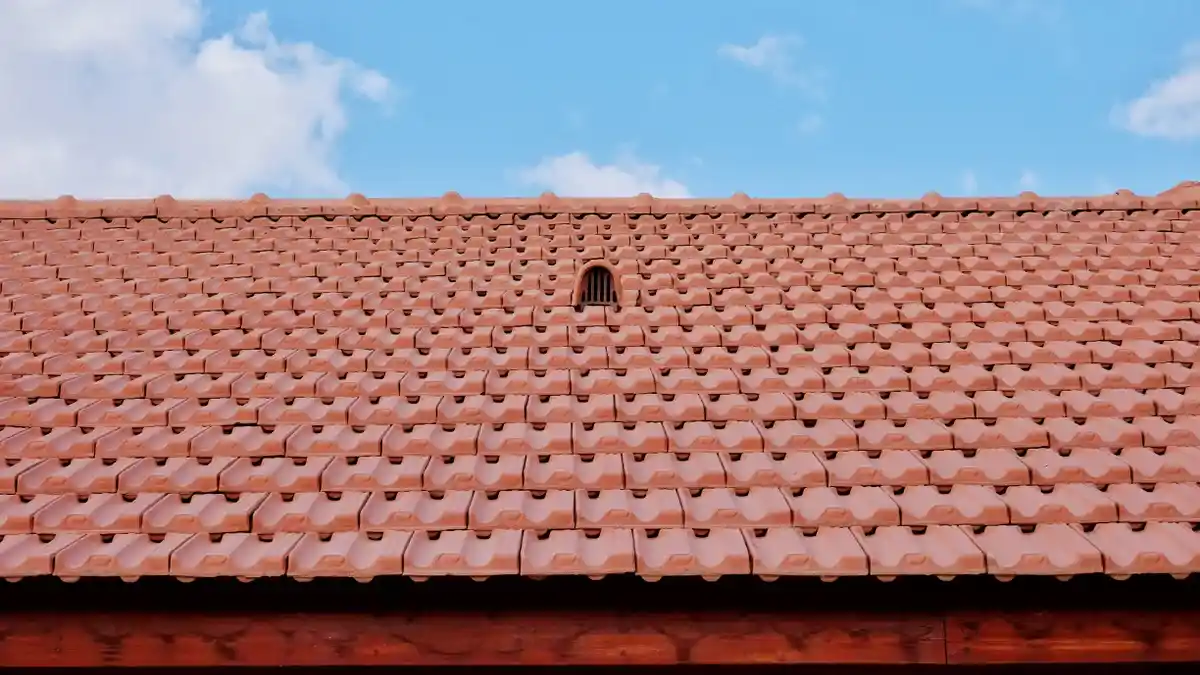
A vented soffit brings outside air into the attic at the roof edge. That matters because warm, moist air rises, and the attic needs a low intake point and a high exit point to keep air moving in a steady path. In a typical roof, the soffit is the easiest place to feed fresh air into the attic without cutting holes higher up the roof.
The key idea is simple: intake at the bottom, exhaust at the top. The International Residential Code commonly uses vent area rules such as the 1:150 and 1:300 ratios when sizing attic ventilation, which shows that soffits are not decorative trim in this context; they are part of the ventilation design. If the soffit vents are open and the upper vent is clear, air can move. If either end is blocked, the system weakens.
That is why a vented soffit can improve airflow but does not guarantee it. A vented soffit with no ridge vent, or with insulation jammed against the roof edge, may not move much air at all. The air still has to travel through the attic, not just enter it.
How does a vented soffit help with a ridge vent?
A vented soffit helps a ridge vent work by feeding it low, cool intake air. The ridge vent sits at the peak of the roof, so it depends on a source of replacement air down at the eaves. When those two parts are connected, the attic can shed hot air and moisture more predictably.
Here is the simplest way to think about the pair:
| Roof setup | What happens to airflow | What it usually means |
|---|---|---|
| Vented soffit + ridge vent | Air enters low and leaves high | Best chance of steady attic airflow |
| Vented soffit only | Air enters, but exit may be weak | Intake is present, but flow can stall |
| Ridge vent only | Air has an exit, but little intake | The vent may underperform |
| Solid soffit + ridge vent | Intake is limited | Airflow can be starved at the eaves |
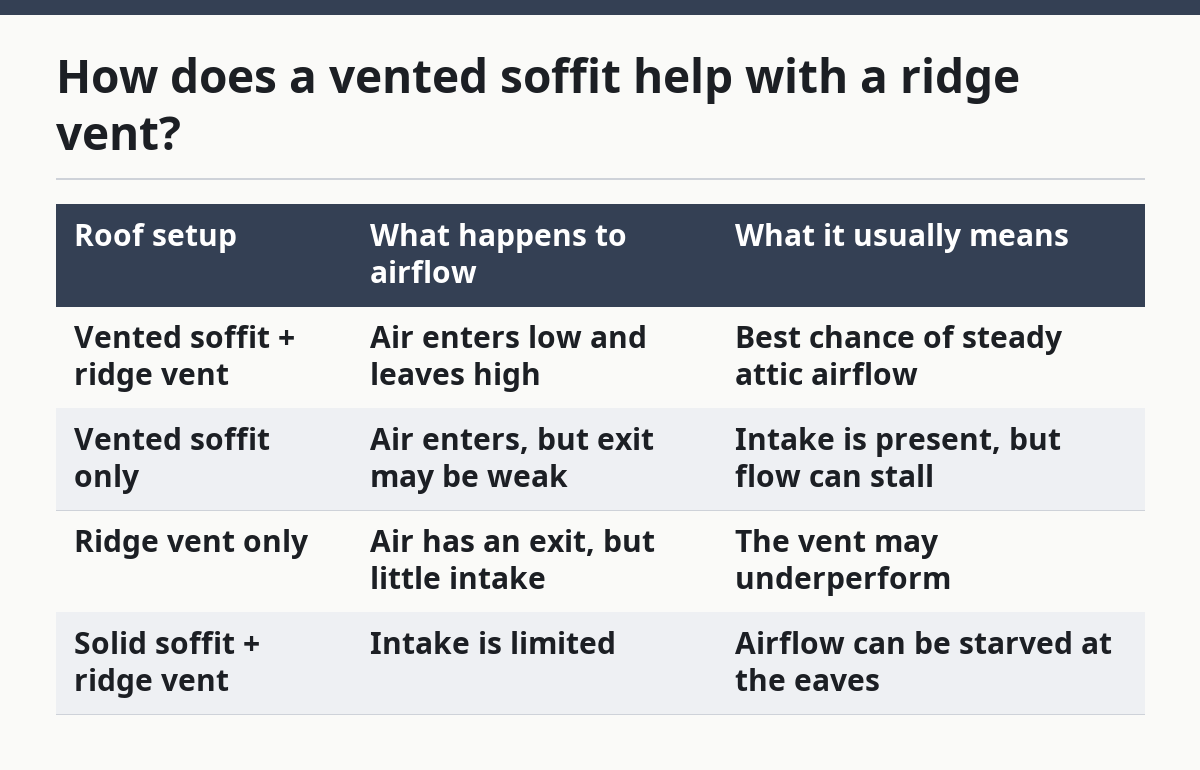
The pair matters because attic ventilation is a system, not a single product. A ridge vent with weak intake can look complete from the ground and still leave the attic sluggish. A soffit vent with no upper exit can also fall short. This is why roofers often talk about the whole vent path, not just one opening.
The trade-off is that ridge vent systems need the soffit area to stay open. If the attic floor insulation blocks the soffit bay, the roof can have vents on paper and poor airflow in practice. That is a common failure point, not a rare one.
What has to be in place for airflow to work?

Airflow works when the soffit vent, attic cavity, and roof exhaust line up with no major blockage. The easiest way to picture it is a clear channel from the eaves to the ridge. If the channel is pinched at any point, the air slows down.
Use this simple procedure when checking a vented soffit setup:
- Look at the soffit from outside and confirm that the vent openings are actually open, not sealed by paint, caulk, or debris. A vent pattern that is covered cannot move air.
- Check the attic side of the eaves for insulation that has slipped into the rafter bay. Even a few inches of loose fill at the edge can block the intake path.
- Look for baffles or chutes at the roof edge. These keep insulation from crowding the vent opening and preserve a clear air lane up the roof slope.
- Follow the air path toward the ridge. If the attic has no ridge vent, or the ridge vent is buried, the vented soffit has less to work with.
- After a warm day or during a damp spell, notice whether the attic feels stagnant or shows damp patches. That is a sign the system may need more than a vented soffit alone.
The goal is not just open holes. The goal is a usable path. A soffit vent that is open to the outside but buried behind insulation inside the attic may look fine and still do very little.
A clear intake path is especially important in homes with deep attic insulation. Insulation is doing its job on the ceiling plane, but it should not crowd the vent opening. If it does, the attic loses one of the main advantages of vented soffits.
Where do vented soffits fall short?
Vented soffits fall short when the attic is already blocked, unbalanced, or built with the wrong vent mix. That is the main limitation, and it matters more than the soffit material itself. A vented soffit is not a cure for a roof that has poor vent design.
The most common problems are easy to describe:
- Blocked intake: Insulation at the eaves can choke off airflow.
- No matching exhaust: A soffit without a ridge vent may bring in air that has nowhere useful to go.
- Uneven vent area: One side of the roof may move air while another side stays still.
- Mixed vent types in the wrong places: Different exhaust openings can compete with each other and weaken the draw.
The cost of these mistakes is not just warmer attic air. Moisture can linger longer, and that moisture can work on roof decking and insulation over time. In winter, trapped moisture can be even more of a problem because warm indoor air that reaches the attic can condense on cold surfaces.
This is where vented soffits are often misunderstood. People expect them to “fix the attic.” They do not. They improve the intake side of a system that still needs clear flow, enough exhaust, and a roof assembly that was designed to breathe in the first place.
Do vented soffits help with moisture and comfort?
Yes, vented soffits can help with attic moisture and indoor comfort, but only by supporting airflow, not by replacing insulation or air sealing. Better attic airflow can help flush humid air out of the attic space and reduce the heat buildup that makes upper rooms feel hot in summer.
That does not mean the attic should be treated as the main fix for comfort. The ceiling plane still needs insulation, and gaps around light fixtures, attic hatches, and duct chases still need attention. If air leaks from the house into the attic, a vented soffit cannot solve that by itself.
There is also a limit to what ventilation can do. A vented soffit can lower the chance of stale attic air sitting still, but it does not stop every moisture source. Bath fans vented into the attic, roof leaks, and damp insulation all create problems that vents alone cannot erase.
For a reader comparing options, the practical takeaway is this: vented soffits are useful when the attic is otherwise ready for them. They are less useful when the attic has bigger problems than airflow, such as leaks, blocked insulation, or missing exhaust venting.
When is a vented soffit the right choice?
A vented soffit is the right choice when the roof system needs a proper intake path and can use that air at the ridge. That makes it a strong fit for many vented attic roofs, especially where the eaves are deep enough to give the intake room to work.
It is not the right choice when the attic cannot support a vented system at all, or when the soffit openings would be blocked by design. A roof with poor upper ventilation, badly placed insulation, or mixed venting strategies may need a different fix before a vented soffit can help.
For readers sorting this out, the question is less “Do vented soffits improve attic airflow?” and more “Does this attic have a clear intake path, a matching exhaust path, and no insulation blockage at the eaves?” If the answer is yes, vented soffits usually help. If the answer is no, they may add openings without adding much airflow.
That is why the broader design matters. This article sits inside the larger guide to soffit and fascia materials and design choices, because the soffit is one piece of a roof system, not a stand-alone decision.
Can vented soffits be too small?
Yes, vented soffits can be too small if they do not provide enough intake area for the roof system. In code terms, attic venting is often sized using ratios such as 1:150 or 1:300, so a tiny strip of venting may look useful but still fall short. Small vents can also clog faster with paint, dust, or insulation dust.
Do all homes need vented soffit?
No, all homes do not need vented soffit. Some roofs are designed with different attic ventilation strategies, and some assemblies are meant to be unvented. The right choice depends on the roof design, the attic layout, and whether the ventilation path can stay clear from the eaves to the high exhaust point.
What blocks soffit airflow?
Insulation is the most common blocker, especially when loose fill slides into the rafter bay at the eaves. Paint, caulk, debris, and even insect screens can also reduce airflow if they cover too much of the opening. A soffit vent only helps when air can actually pass through it and move into the attic.
Sources
- International Residential Code, Section R806, attic ventilation requirements
- U.S. Department of Energy, attic insulation and ventilation guidance
Drafted with AI; not yet reviewed by a person.